Nullam dignissim, ante scelerisque the is euismod fermentum odio sem semper the is erat, a feugiat leo urna eget eros. Duis Aenean a imperdiet risus.
Nullam dignissim, ante scelerisque the is euismod fermentum odio sem semper the is erat, a feugiat leo urna eget eros. Duis Aenean a imperdiet risus.
 author
A diamond coated drill bit is usually the stronger option when abrasive materials, long production runs, hole consistency, and tool-change frequency are the main concerns. Carbide drills still make sense for general CNC work, lower-abrasion materials, prototypes, and shorter batches where the extra wear resistance of diamond coating may not repay its higher purchase cost. The decision should therefore be based on workpiece material, expected tool life, hole tolerance, production volume, and cost per acceptable hole rather than hardness alone.
For buyers comparing carbide vs diamond drill bits, the real question is not which material looks better on a specification sheet. It is which tool keeps the process stable at the lowest practical production cost.

The two tool types are often described as completely different materials, but industrial drilling is more nuanced. A diamond coated drill bit commonly starts with a carbide substrate and gains its additional wear resistance from a CVD diamond layer deposited over the cutting surface.
Cemented carbide is still often used because of its rigidity and its specific cutting geometry. It has a hardness of 1400–1800 HV, which is sufficient for most of the CNC applications of today.
However, there are limitations to using a slot drill when workpieces contain hard abrasive phases. While glass fibers in PCB laminates, carbon fibers in composites and abrasive particles in graphite are not typically a problem, they can progressively round the cutting edge of the drill bit. As the cutting edge wears, the hole size, the amount of burr left on the workpiece and the surface quality all start to deteriorate.
CVD coating adds a polycrystalline diamond layer to the carbide tool. CVD diamond hardness around 9000–10000 HV, with a friction coefficient of approximately 0.05–0.1 and controllable coating thickness in the 1–30 μm range.
Of course, when choosing a drill bit, more than resistance to breakage is taken into account. A bit with slower edge wear, low friction and high thermal conductivity will allow the cutting geometry to remain intact longer.
TSHZ develops superhard cutting tools around this carbide-substrate and CVD-coating approach. The company’s product range includes PCB-precision-micro-drills, graphite tools, milling cutters, dental burs as well as a host of customized diamond-coated tools to machined abrasive materials. The coating is not treated as a universal upgrade, but rather as a function-dependent component, with the choice of product depending on workpiece material, tool design, and production requirements.
For users evaluating CVD diamond coated drill bits, this distinction is critical. The coating improves the surface behavior of a properly designed carbide tool; it does not remove the need for suitable geometry, chip evacuation, and machining parameters.
Diamond coating is mainly suited to abrasive non-ferrous and non-metallic materials such as graphite, CFRP, PCB laminates, ceramics, and high-silicon aluminum.
It should not be treated as a universal replacement for carbide. Diamond has unfavorable chemical behavior with iron at elevated cutting temperatures, so ferrous materials such as hardened steel and stainless steel require a different tooling strategy.
This is why drill bits for abrasive materials should be selected from the workpiece outward rather than simply by coating hardness.
The advantage becomes clearer once tool wear begins affecting process stability. The strongest cases are usually abrasive materials, repetitive production, and applications where small changes in cutting-edge condition create costly hole defects.
In selected PCB applications, CVD diamond-coated tools can achieve substantially longer life than ordinary carbide. TSHZ application data includes PCB cases reaching 20–30 times the carbide baseline, while graphite machining examples range from approximately 3–18 times. These figures should be treated as application-specific rather than universal because diameter, laminate structure, spindle conditions, and tool geometry all affect actual life.
This is where diamond coated drill bits for CNC machining become commercially interesting. A longer cutting interval means fewer tool changes and less dimensional drift caused by a progressively worn edge.
Diamond has a reported thermal conductivity of about 2000 W/(m·K), while the CVD surface has a very low friction coefficient.
For drilling, these properties help in two practical ways. Lower friction reduces cutting resistance and chip adhesion. High thermal conductivity moves heat away from the cutting zone more rapidly.
That matters in resin-containing boards and other heat-sensitive composites, where a worn or hot tool can contribute to smeared material, rough hole walls, or unstable drilling behavior.
FR-4 combines glass fiber, resin, and copper foil. The glass fibers accelerate abrasive wear, while declining edge sharpness can contribute to burrs, Nail Head formation, hole-position deviation, and rough hole walls.
For demanding multilayer and HDI work, the TSHZ PCB diamond drill bit range includes the TS-A01UC series. Its application is centered on chip evacuation and hole finishing in multilayer and HDI boards. The TS-A01UC specification range includes diameters from approximately 0.2 to 1.2 mm.
For this type of production, a diamond coated drill bit is valuable because it is intended to keep the cutting edge stable for longer rather than simply drilling faster.

A more expensive coating does not automatically create better economics. Buyers should first determine whether tool wear is actually limiting the current process.
For lower-abrasion materials, ordinary drilling, and applications with modest hole-quality requirements, carbide may already provide sufficient tool life.
If a carbide drill completes the batch without meaningful edge degradation, dimensional drift, or excessive tool changes, changing to diamond coating may add cost without solving a real problem.
Prototype production and small batches often favor carbide because there may not be enough cutting volume to recover the additional cost of coating.
The calculation changes in continuous production. If frequent replacements stop the spindle, require tool setting, or create inspection interruptions, the longer working interval of a coated tool becomes more relevant.
For steel and other iron-rich workpieces, diamond should not be selected simply because it is harder.
Material compatibility comes first. This boundary is especially important for purchasing teams sourcing drill bits for abrasive materials, since “abrasive” alone does not mean diamond coating is suitable.
A practical selection process should combine material behavior, production volume, hole geometry, and process cost. Comparing only tool prices usually gives an incomplete answer.
| Machining Situation | Carbide Drill | Diamond-Coated Drill |
| General lower-abrasion machining | Practical | Often unnecessary |
| Prototypes and short batches | Usually economical | Depends on tool-life benefit |
| Standard PCB production | Suitable in many cases | Useful where wear limits output |
| HDI and abrasive multilayer PCB | Faster wear may become a concern | Strong candidate |
| CFRP and abrasive composites | Wear must be monitored closely | Often better suited |
| Graphite | Abrasive wear can be rapid | Strong candidate |
For diamond coated drill bits for PCB drilling, production volume matters almost as much as laminate type. A tool that costs more at purchase can still be cheaper to run if it produces more acceptable holes before replacement.
TSHZ divides its PCB drilling range by application rather than offering one geometry for every board.
The TS-A01UC series targets multilayer and HDI drilling. TS-A02 ST is intended for more conventional materials such as FR-4 and CEM-E boards. TS-A03 covers larger-hole requirements and includes drill diameters up to 6.5 mm.
Hole diameter also needs to account for the finished specification and plating allowance. For holes above 0.5 mm, the available selection guidance includes a typical plating compensation range around 0.03–0.05 mm, although the final value must follow the actual PCB process.
A useful purchasing calculation is:
Cost per Hole = Tool Cost ÷ Total Acceptable Holes Produced
Tool cost alone does not include tool-change downtime, machine interruption, offset adjustment, inspection, or scrap caused by an over-worn drill.
In selected applications, CVD-coated tools have reduced combined tooling cost by around 20–30% and tool-change time by about 90%. These are application results rather than guaranteed figures, but they show why a diamond coated drill bit should be evaluated through production cost instead of purchase price alone.
Once the material and production requirement are clear, the next step is matching the drill construction to the actual process. TSHZ supports both standard PCB drilling and application-specific CVD tooling.
The PCB diamond drill bit range is most relevant where FR-4, multilayer boards, HDI structures, or other abrasive PCB laminates cause rapid edge wear.
TS-A01UC is the stronger fit for demanding micro-drilling, while TS-A02 ST and TS-A03 cover different board and diameter requirements. This makes product selection easier than treating every PCB drilling job as the same application.
For projects beyond PCB drilling, TSHZ offers CVD Diamond-Coated Cutting Tools for materials including graphite, CFRP, high-silicon aluminum, and other abrasive non-ferrous or non-metallic workpieces.
The useful question is not whether diamond is harder than carbide. It is whether the coating can preserve the required geometry and cutting condition for longer under the actual material load.
Standard catalog tools cannot cover every hole diameter, reach, flute geometry, or workpiece structure. For those cases, TSHZ provides a custom profile service based on material characteristics, machining conditions, dimensional requirements, and expected tool performance.
Before selecting a custom tool, prepare the workpiece material, required hole diameter and depth, tolerance, current carbide tool life, spindle conditions, and expected batch size. These details give the engineering team a more useful basis for tool selection.
If your current carbide drill is wearing too quickly, producing inconsistent holes, or forcing frequent tool changes, share the material, hole specification, batch size, and current tool-life information through the TSHZ contact channel. This helps determine whether a standard PCB drill, another CVD configuration, or a custom profile is the more sensible route.
Is a diamond coated drill bit always better than a carbide drill?
No. A diamond coated drill bit is most useful for abrasive non-ferrous or non-metallic materials and longer production runs. Carbide can remain more economical for general machining, short batches, and applications where wear is not limiting the process.
What materials are suitable for diamond coated drill bits?
Typical applications include PCB laminates, graphite, CFRP, ceramics, and high-silicon aluminum. Material chemistry must still be checked because diamond coating is generally not intended for iron-rich materials such as steel.
Why are diamond coated drill bits used for PCB drilling?
The Glass Fibers in FR-4 type PCBs as well as in Multilayer PCBs are very abrasive. Diamond Coated Drill Bits for PCB Drilling maintain their cutting edge for a longer time. This allows for the control of Burr, Hole Wall, Nail Head etc. and the tool change frequency during mass production.
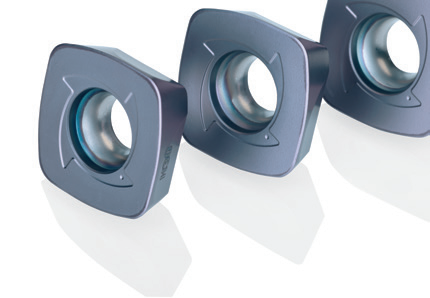
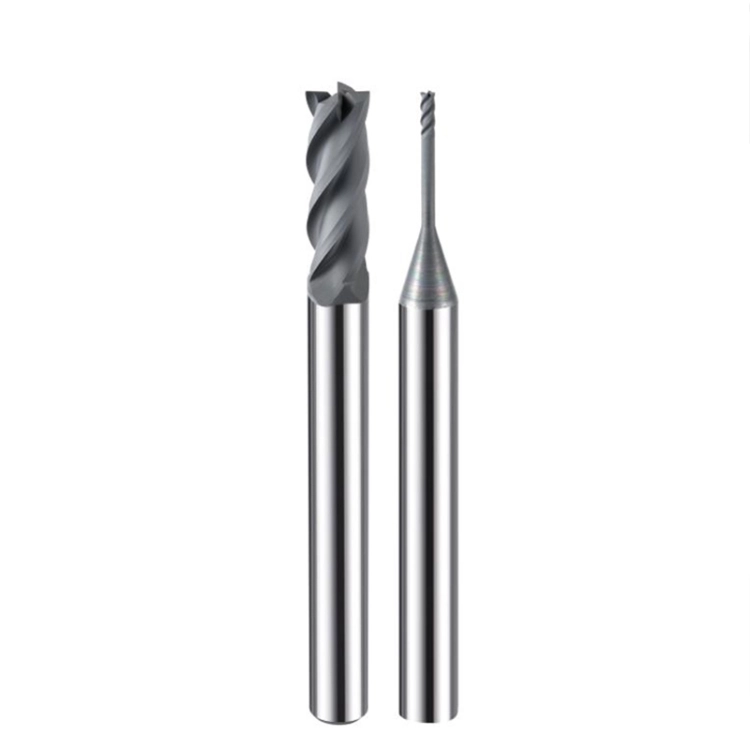
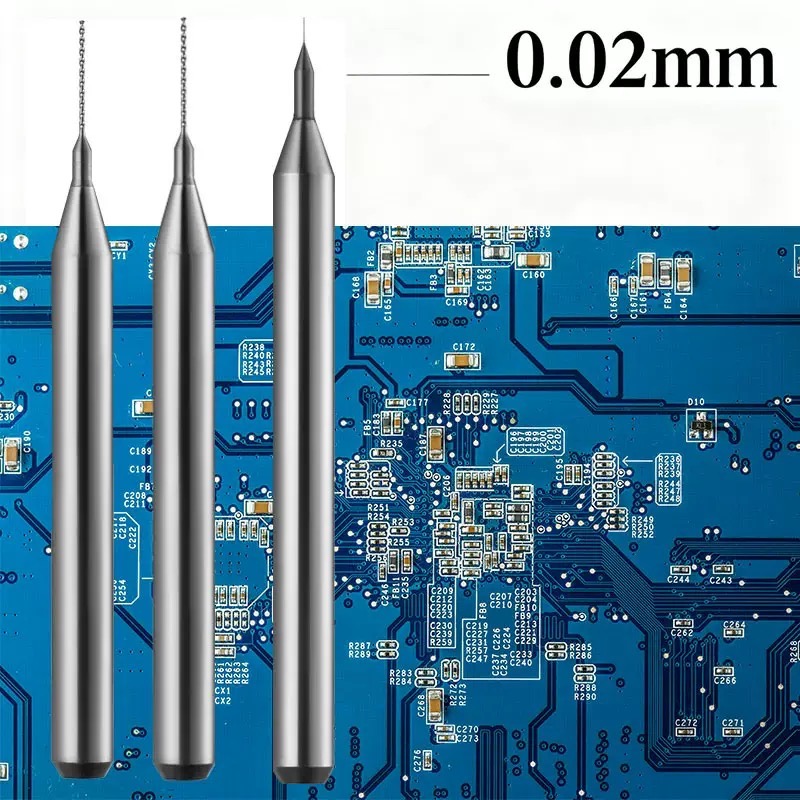
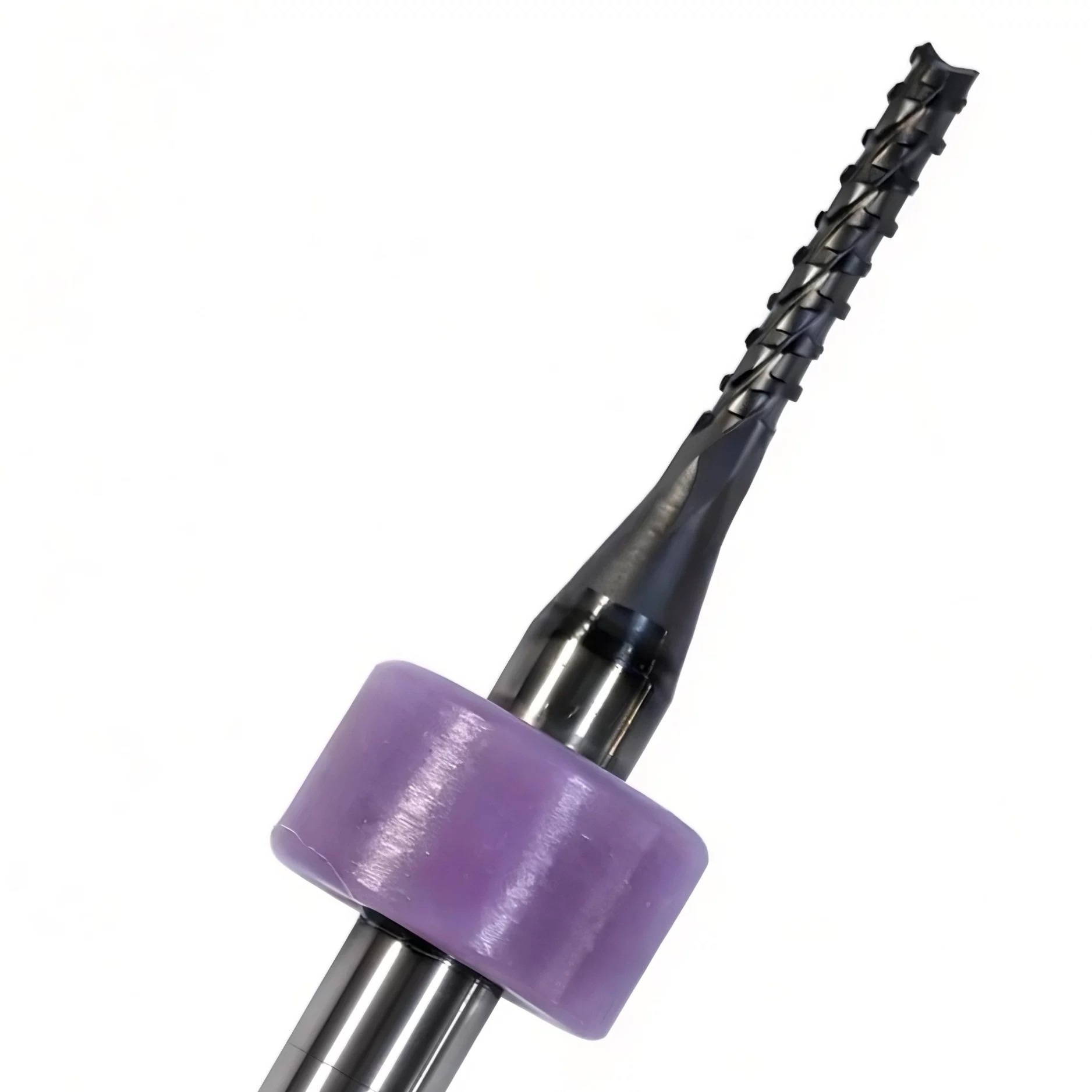
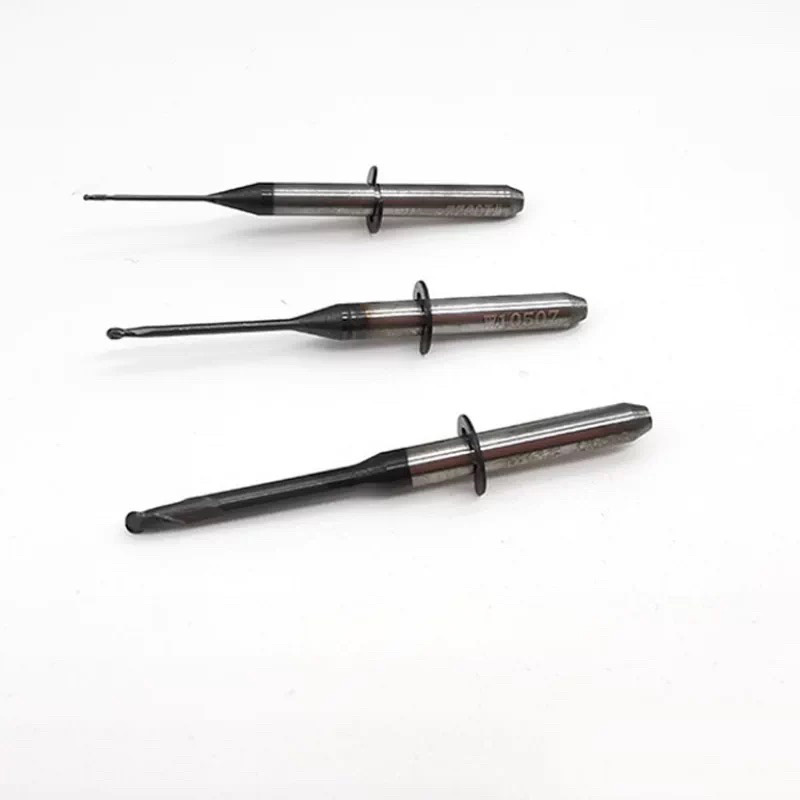
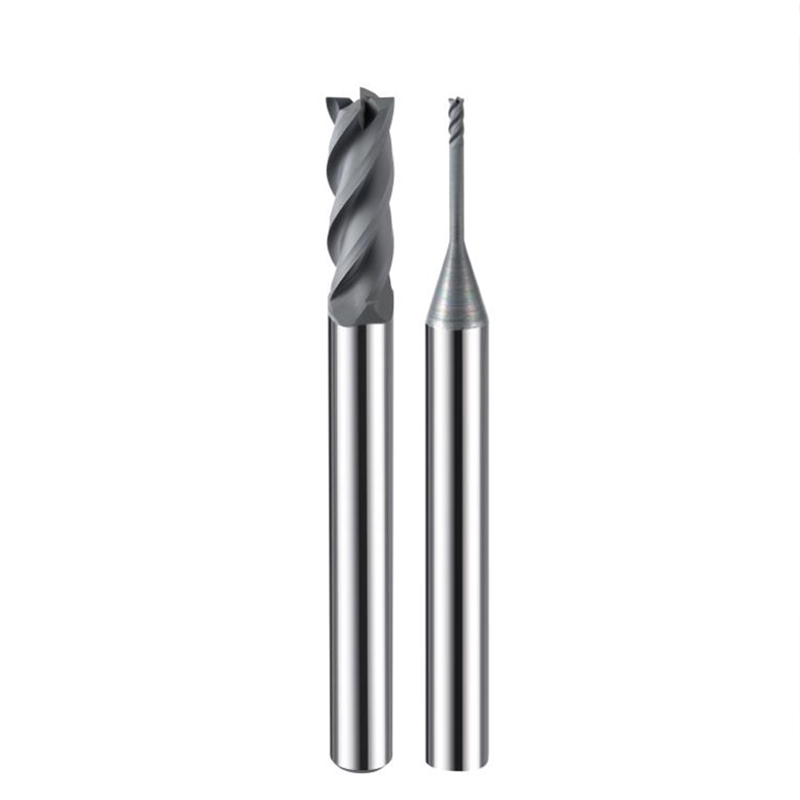
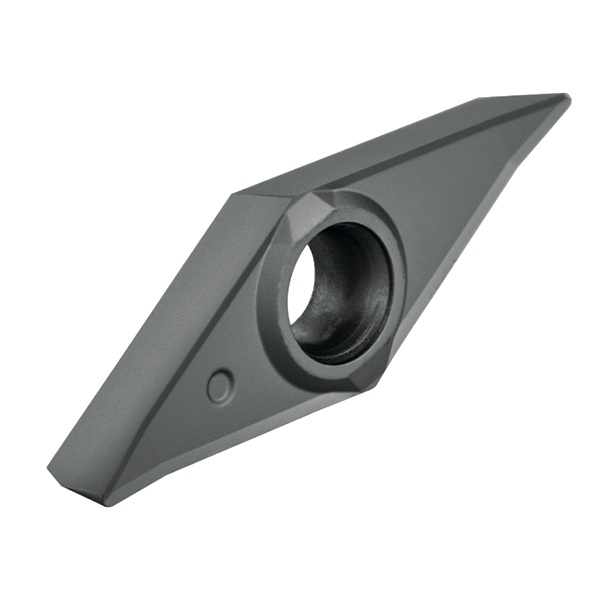
Graphite, Ceramics, and Carbon Fiber are the future, but they are “tool killers.” If you’re still using traditional coating, you’re fighting a losing battle.
Our CVD (Chemical Vapor Deposition) Diamond Coating creates a real crystalline diamond layer on the carbide substrate. This isn’t just a “finish”—it’s a shield.
Why top distributors choose our CVD series:
1.Ultra-Low Friction: Prevents chip welding and heat buildup.
2.Extreme Abrasion Resistance: Maintains sharp cutting edges $20 \times$ longer.
3.Surface Finish: Mirror-like results on the workpiece, zero secondary polishing needed.