
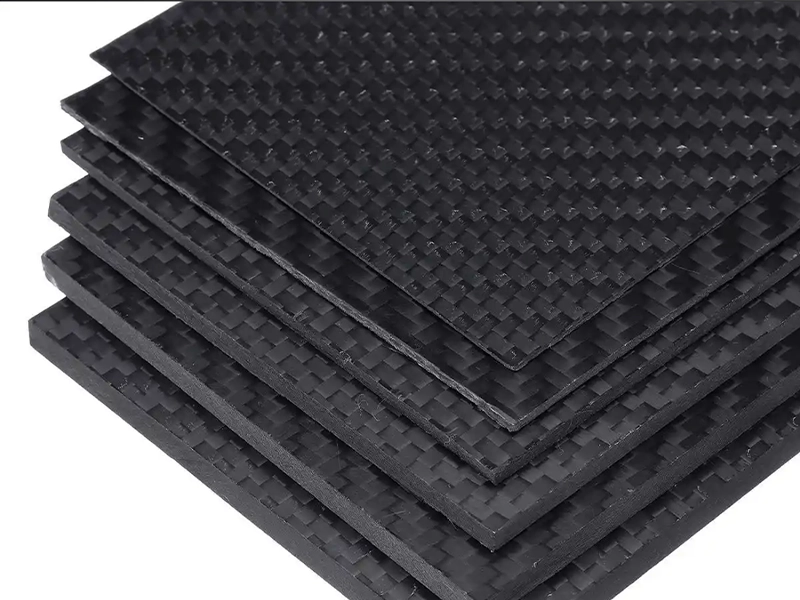
Machining CFRP & GFRP Fiber Reinforced Plastics with CVD Diamond Coated Tools
1. Main Machining Defects of Composite Materials
Carbon fiber reinforced polymer (CFRP) & glass fiber reinforced plastic (GFRP) are key lightweight materials for aerospace, wind power and automotive industries. The dual-phase fiber-resin structure brings tough machining challenges:
- Sharp hard glass/carbon fibers rapidly round carbide cutting edges, causing delamination, fiber fraying, burrs and ply splitting;
- Resin matrix melts above 200°C, thermal damage reduces structural fatigue strength of composite parts;
- Drilling & edge trimming easily trigger entry spalling and exit delamination, leading to high scrap rate under strict aerospace inspection standards.
2. Core Solutions Brought by Diamond Coating
- Outstanding abrasion resistance preserves sharp cutting edges: Resists continuous grinding from glass/carbon fibers, tool life extended 12–30 times vs carbide, drastically reduces delamination and fiber pull-out;
- High thermal conductivity maintains low cutting temperature: Prevent resin carbonization and interlayer structural damage;
- Low-friction clean cutting severs fibers cleanly without pulling, smooth cutting surfaces and holes, eliminate secondary polishing steps;
- Uniform diamond coating covers complex combined drill-mill cutters, suitable for routing, drilling, edge trimming and slotting.
3. Material-Based Tool Selection
- CFRP carbon fiber composite: Nano crystal diamond coated cutters with thin sharp edges to minimize fiber tearing;
- GFRP fiberglass panels: Thick micron diamond coating for stronger abrasion resistance against glass fibers;
- Composite drilling: Double point angle diamond coated step drills to suppress entry & exit delamination.
4. Recommended Cutting Parameters
Cutting speed Vc: 300~700 m/min; Feed per tooth fz: 0.05~0.2 mm/z; Dry cutting or minimal quantity lubrication (MQL). Rigid clamping fixture required to avoid vibration-induced delamination.
5. Primary Application Industries
Aerospace fuselage, wind turbine blades, NEV carbon fiber housings, marine composite components, UAV casings.
6. Safety Restrictions
Never machine ferrous metals. Composite machining dust is irritant; dust extraction & protective gear must be used throughout operation.