< img height="1" width="1" style="display:none" src="https://www.facebook.com/tr?id=26825290190466607&ev=PageView&noscript=1" />

Nullam dignissim, ante scelerisque the is euismod fermentum odio sem semper the is erat, a feugiat leo urna eget eros. Duis Aenean a imperdiet risus.

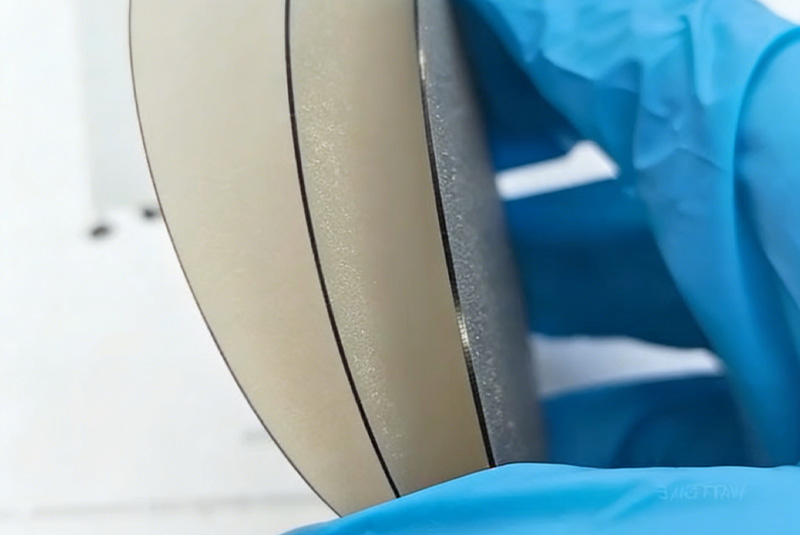
CVD diamond thick film

From Coatings to Materials: The Technological Boundaries and Application Prospects of CVD Diamond Free-Standing Thick Films

Diamond is not only the hardest substance in nature but also a "dream material" in modern physics and electronics due to its extremely high transmittance across the entire spectrum and unparalleled thermal conductivity (theoretically up to 2200 W/(m·K)). When CVD diamond films exceed the 100 μm thickness threshold and are detached from the substrate through continuous growth, they transform from auxiliary coatings into high-performance free-standing structural materials.
The rise of CVD diamond self-standing thick films marks a bold leap into the realm of extreme physics for modern manufacturing. From thermal management and optical windows to high-frequency applications, this 'ultimate material' is shattering the performance limits of next-generation devices. It is the essential foundation for the future of 5G/6G networks, aerospace innovation, and the next frontier of high-energy conversion.
CVD-diamond-thick-film

CVD Diamond thick film

Our CVD diamond thick films are synthesized using industry-leading MPCVD technology, with thicknesses ranging from 0.3to 3.0. By precisely controlling crystal growth orientation, our thick films achieve large-area, highly uniform industrial mass production while retaining the intrinsic properties of natural diamond. They are the premier choice for cutting tools and thermal management (Heat Sinks) under extreme operating conditions.
Learn More
FAQ

Frequently Asked Questions

Diamond-coated cutting tools
"Price is what you pay, Cost is what you lose. A $15 tool that stops your $200k machine every 2 hours is the most expensive thing in your shop. Our CVD tool costs more because it buys you 40 hours of uninterrupted 'spindle-on' time. Which one saves you more by the end of the month?
I love skeptics—they usually become our best customers. In G5 Graphite or 18% Silicon Aluminum, standard carbide yields to abrasion in minutes. Our $8000 HV$ diamond crystalline layer literally ignores that abrasion. We don’t just claim it; we have the micro-wear test reports to back it up. Want to see the comparison video?
Stop right there. I’d love to sell you a tool, but Diamond and Iron are 'enemies' at high temperatures (chemical affinity). For steel, use our AlTiN series. But if you’re cutting Graphite, CFRP, or Ceramics, our CVD is the undisputed king. We sell solutions, not just metal.
That’s the difference between DLC (Diamond-Like Carbon) and True CVD. Most cheap 'diamond' tools are just thin films. Our CVD is chemically grown into the carbide substrate. It doesn't just sit on top; it's part of the tool. No peeling, just pure cutting.
Actually, it improves it. Because the diamond layer is ultra-smooth and the edge stays sharp 20x longer, you avoid the 'tearing' effect of a dull tool. You get a mirror-like finish on the 100th part just as you did on the 1st.
Don't sell them a tool; sell them 'Machine Capacity.' Tell your customers: 'Would you rather buy 1 tool and run all night, or buy 20 tools and pay someone to stand there and change them?' The labor savings alone pay for the tool.
"Diamond loves speed. High RPM is where it shines. We provide a customized cutting data sheet with every order. If you’re not sure, send us your material grade and we’ll calculate the optimal Vc and Fz for you. We don't just ship tools; we ship success."
We control coating thickness within $\pm 2\mu m$. In high-precision graphite electrode machining, we know microns matter. Our QC report for every batch ensures your offsets stay consistent from tool #1 to tool #100.
We stock standard sizes for immediate dispatch. We use DHL/FedEx—typically 4-7 days to your doorstep. We know a downed machine is a bleeding wound, and we’re here to stop the bleeding fast.
We offer 'Performance Guarantee' samples for qualified shops. We don't give them away for free because high-end tech has a cost, but if it doesn't outperform your current tool by at least 10X, the next one is on me. Fair enough?
A pure diamond film is "grown" onto the surface of a carbide substrate using chemical vapor deposition (CVD) technology. This film exhibits properties close to those of natural diamond, giving the tool exceptional hardness and wear resistance.
The hardness of a CVD diamond coating reaches up to 9000HV, making it one of the hardest tool coatings available in industry today.
When machining graphite materials, tool life typically increases by 3 to 18 times; in PCB processing, life extension can reach 20 to 30 times.
Graphite is highly abrasive and brittle, causing rapid wear on conventional tools. The high hardness of diamond coatings effectively resists wear and prevents chipping at the cutting edge.
4-flute: suitable for finishing or hard graphite, providing better surface finish. 2-flute: ideal for deep slotting or small-diameter tools (below D2), ensuring sufficient chip evacuation space and preventing tool breakage.
n principle, drill diameter = finished hole diameter – plating copper thickness compensation. A common recommendation is to add 0.03–0.05 mm compensation for finished hole diameters over 0.5 mm.
Whether machining graphite or PCBs, shorter overall lengths provide improved rigidity, reducing runout and minimizing the risk of tool breakage during operation.
This refers to deformation formed on the inner wall of a drilled hole due to drill wear or pulling action on the copper foil during retraction. Using CVD diamond-coated tools significantly reduces nail heads, improving hole wall quality.
Regrounding is not recommended. Reshaping would damage the diamond coating, exposing the lower-hardness substrate and drastically reducing performance.
Typically, replace the tool when hole wall quality deteriorates (e.g., burrs or nail heads exceeding 50 μm), visible edge wear under microscope, or when the processed quantity reaches 80–90% of the recommended tool life.
Although their unit price is typically 3–5 times higher than standard tungsten carbide tools, their extended lifespan results in a lower cost per hole, making them more economical in the long run.
High abrasiveness: The glass fibers in PCB materials are extremely hard and brittle, causing rapid wear of standard drill bits. Burrs and nail heads: Copper foil has high ductility, making it prone to burr formation at hole entrances or "nail head" defects when exiting, resulting in poor hole wall quality. Heat dissipation issues: Resin has low thermal conductivity; localized overheating can soften the tool.
Ultra-high wear resistance: Coating hardness reaches 9000HV, with a service life 20–30 times longer than conventional carbide drills. Reduced defects: Exceptionally sharp cutting edges significantly minimize burr and nail head formation. Thermal stability: Diamond has excellent thermal conductivity, enabling efficient heat dissipation and preventing resin burn on hole walls.
HDI/multilayer boards: Recommend TS-A01UC series, featuring a special UC flute design for superior chip evacuation, ideal for high-density micro-holes. Standard FR-4/CEM boards: Recommend TS-A02 ST standard series, offering the best cost-performance ratio. Large-diameter/thick boards: Recommend TS-A03 series, capable of drilling up to 6.50mm diameter with shank larger than drill diameter.
Exit burrs: Add a 0.3–0.5mm aluminum backing plate underneath the board and optimize retraction parameters. Entry burrs: Reduce feed rate during entry or switch to sharper diamond-coated drill bits.
Get Standed
Is your tooling keeping up with the "Difficult-to-Machine" era?

Leave A Message

Graphite, Ceramics, and Carbon Fiber are the future, but they are “tool killers.” If you’re still using traditional coating, you’re fighting a losing battle.
Our CVD (Chemical Vapor Deposition) Diamond Coating creates a real crystalline diamond layer on the carbide substrate. This isn’t just a “finish”—it’s a shield.

Why top distributors choose our CVD series:
1.Ultra-Low Friction: Prevents chip welding and heat buildup.
2.Extreme Abrasion Resistance: Maintains sharp cutting edges $20 \times$ longer.
3.Surface Finish: Mirror-like results on the workpiece, zero secondary polishing needed.


    Your Name*

    Email

    Tel

    WhatsApp*

    Message

    Products
    Contacts
    WhatsApp
    Email