Nullam dignissim, ante scelerisque the is euismod fermentum odio sem semper the is erat, a feugiat leo urna eget eros. Duis Aenean a imperdiet risus.
Nullam dignissim, ante scelerisque the is euismod fermentum odio sem semper the is erat, a feugiat leo urna eget eros. Duis Aenean a imperdiet risus.
 author
High-speed machining of abrasive or non-ferrous workpieces requires stable tooling geometry, thermal control, and extreme edge retention. Selecting the proper tool for precision cutting determines whether a spindle runs continuously or halts every few hours due to micro-chipping and thermal deformation. In automated production environments, tool longevity directly dictates batch quality and operating margins.
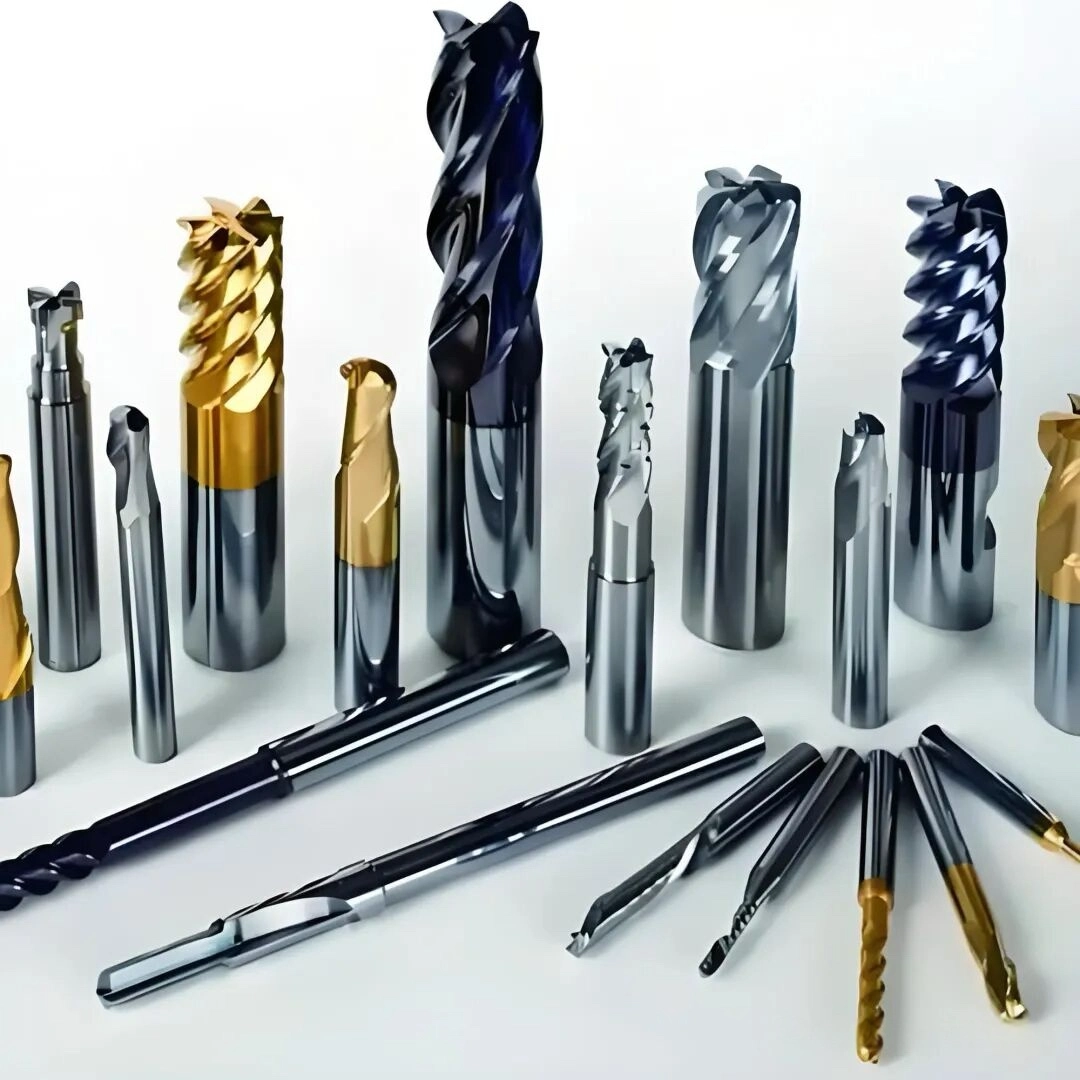
Modern machine shops handling graphite, composites, and high-density circuit boards face severe mechanical abrasion. Standard uncoated tungsten carbide yields rapidly to severe edge recession. TSHZ, backed by 30 years of diamond thin-film research from Shanghai Jiao Tong University , manufactures specialized CVD diamond-coated tooling engineered to eliminate unexpected downtime in high-tolerance manufacturing.
Typical hardened tool steel substrates have a hardness of 1400-1800 HV. At high speed machining of non-ferrous materials or of abrasive materials, such high surface hardness very quickly is worn down by friction. By depositing a pure polycrystalline diamond layer using hot-filament chemical vapor deposition (CVD), the surface hardness is increased to 8000-10000 HV. The crystalline layer lowers the friction coefficient to 0.05-0.1. High-performance cutting tools thus are created for precise cutting, which have low cutting forces, do not allow the formation of a built-up edge (BUE) , and very rapidly dissipate heat in the primary shear zone.
Cobalt binder degradation in tungsten carbide causes coating delamination as the main failure in diamond-coated tools. Cobalt in tungsten carbide acts as a catalyst for the graphite formation instead of diamond nucleation during high-temperature deposition. A two-step chemical etching, which is precise cobalt leaching to a controlled depth of 3–5 µm below the surface of the substrate, has been found to solve the coating delamination problem. The leaching process creates micro anchors, which, after the CVD diamond film attachment, interlock the diamond film into the substrate carbide lattice to form mechanical and chemical bonds at atomic level. These bonds are strong enough to resist high shear forces during heavy cutting operations.
Abrasive dust, resin heat, and thin-wall geometry create distinct failure modes during continuous milling or drilling. Matching specific tool geometry to material wear characteristics prevents edge chipping and maintains strict dimensional tolerances across long workpiece runs.
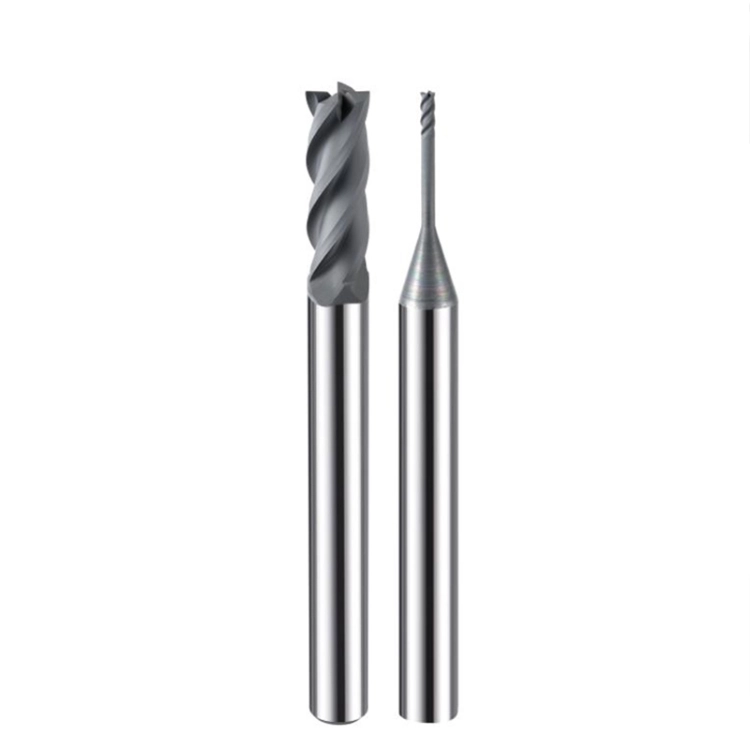
Executing graphite electrode machining for EDM processes causes severe flank wear on standard cutters. As the cutting edge recedes, workpiece dimensions shift, leading to scrapped molds. Installing CVD Diamond Coated Flat-Bottom End Mills mitigates abrasive wear during slotting and shoulder milling. With a low friction coefficient and high thermal conductivity , these tools yield a 3 to 18 times increase in service life compared to uncoated carbide , allowing shop managers to maintain micron-level profile accuracy without constant tool offset adjustments.
In PCB micro-drilling for High Density Interconnect (HDI) circuit boards , processing glass-fiber FR-4 and copper laminates generates intense friction heat. Dull drill bits tear copper layers, resulting in “nail head” defects and resin smearing. High-Precision PCB Diamond Micro-Drill Bits feature optimized chip clearance flutes and micro-grain diamond coatings. They deliver 20 to 30 times the operational lifespan of traditional drill bits while keeping nail head expansion below 20 µm , satisfying stringent IPC Class 3 standards for multi-layer board reliability.
Finishing 3D glass-hot-bending molds or contoured graphite surfaces requires stable cutting radii and smooth chip evacuation. Evaluating every tool for precision cutting used in graphite contouring highlights the importance of surface smoothness. CVD Diamond Coated Ball Nose & Contour Mills feature ultra-smooth nano-crystalline surface topographies. With thermal conductivity reaching 2000 W/(m·K) , these tools channel friction heat away from delicate R-angle edges, eliminating surface chatter marks and preventing workpiece edge breakage.
Composite laminates and dental ceramics present opposing machining risks: fiber delamination and brittle edge cracking. Advanced diamond tooling relies on sharp rake angles and extreme hardness to shear fibers cleanly rather than tearing them.
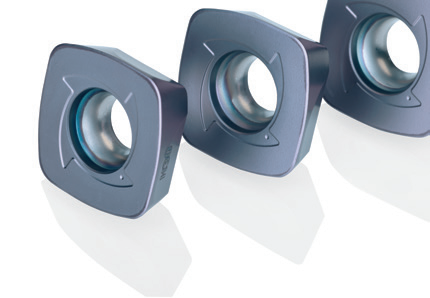
High-silicon aluminum alloys and abrasive non-ferrous castings quickly dull conventional turning and milling inserts. Superhard CVD Diamond Indexable Inserts replace fragile single-point tools in heavy-roughing environments. Providing 10 to 20 times the wear resistance of standard carbide inserts , these indexable cutters reduce tool-change downtime and ensure stable dimensional control during high-feed turning operations.
Executing composite material milling on Carbon Fiber Reinforced Polymers (CFRP) in aerospace components often leads to costly part rejection due to fiber fraying and layer separation. Specialized CFRP & Composite Routers combine optimized rake angles with superhard diamond protection. Using an appropriate tool for precision cutting prevents delamination by cleanly shearing structural carbon fibers without pulling them from the matrix resin.

CAD/CAM dental milling of pre-sintered zirconia and glass-ceramics demands burs that maintain crisp cutting edges under dry or micro-lubricated conditions. Micro-Diameter Dental & Ceramic Milling Burs retain edge sharpness across hundreds of units. The chemically inert CVD diamond coating resists thermal shock , ensuring burr-free margins on delicate dental crowns without micro-cracking.
Tool procurement decisions often focus on upfront purchase prices while ignoring machine spindle utilization and scrap rates. Evaluating total production economics reveals that long-life tooling delivers significant financial returns.
| Tool Category & Coating | Substrate Hardness (HV) | Surface Hardness (HV) | Friction Coefficient | Typical Tool Life Ratio |
| Standard Tungsten Carbide | 1400–1800 | 1400–1800 | 0.4–0.6 | 1x (Baseline) |
| DLC (Diamond-Like Carbon) | 1400–1800 | 2500–5000 | 0.1–0.2 | 2x–3x |
| TSHZ CVD Diamond Coated | 1400–1800 | 8000–10000 | 0.05–0.1 | 10x–30x |
While CVD diamond tooling carries a higher initial purchase price than standard carbide , its operational life spans up to 30 times longer. Investing in a high-performance tool for precision cutting shifts workshop cost structures by slashing tool-change downtime by approximately 90%. Over large production runs, calculating the cost per part shows that this extended spindle uptime lowers overall component expenses by 20% to 30% , increasing machine utilization across automated shifts.
Standard catalog tooling cannot fulfill complex workpiece geometries, deep-cavity profiles, or unique shank tolerance limits. Non-Standard Custom Engineered Tools match specific customer blueprints. By adjusting chemical cobalt leaching depth, flute rake angles, and diamond film thickness between 1 and 30 µm , custom tooling eliminates vibration and premature tool failure in non-standard operations.
Optimizing machining parameters requires technical alignment between cutter geometry, spindle speeds, and target material properties. Working directly with specialized diamond coating manufacturers ensures predictable production results.
TSHZ offers engineering support backed by 5-axis CNC grinding facilities and state-of-the-art CVD reactors. Qualified production shops can request performance guarantee sample testing to verify tool life improvements on their own machine floors before committing to volume procurement orders.
Standard catalog specifications remain stocked for immediate dispatch , while custom engineered drawings undergo rapid technical review. Global orders ship via DHL or FedEx with 4 to 7 day delivery timelines , minimizing machine downtime during urgent tooling replacements.
If your machine shop experiences excessive tool wear, surface burrs, or frequent spindle stoppages in abrasive material milling, selecting an engineered tool for precision cutting requires direct alignment with tooling specialists. Contact our technical engineering team with your workpiece drawings and material specifications for customized tool selection guidance.
Q: What makes a diamond-coated tool for precision cutting better than standard tungsten carbide?
A: A CVD diamond-coated tool features a true polycrystalline diamond surface grown onto a tungsten carbide core. This layer increases surface hardness to 8000–10000 HV and lowers friction to 0.05–0.1 , preventing abrasive wear and built-up edge formation in non-ferrous materials.
Q: Can CVD diamond-coated tools be used for machining hardened steel or stainless steel?
A: No. At elevated cutting temperatures, the iron in steel reacts with the carbon in diamond to cause very rapid chemical wear. CVD diamond tools are designed for use on very abrasive non-ferrous materials such as graphite, CFRP, aluminum alloys, ceramics and PCB laminates.
Q: How do I evaluate a tool for precision cutting for non-standard machining projects?
A: Review the target material’s abrasiveness, required slot depth, shank tolerance requirements, and part tolerances. For non-standard workpieces, providing technical CAD/CAM drawings allows engineers to customize flute geometry, cobalt leaching depth, and coating thickness.
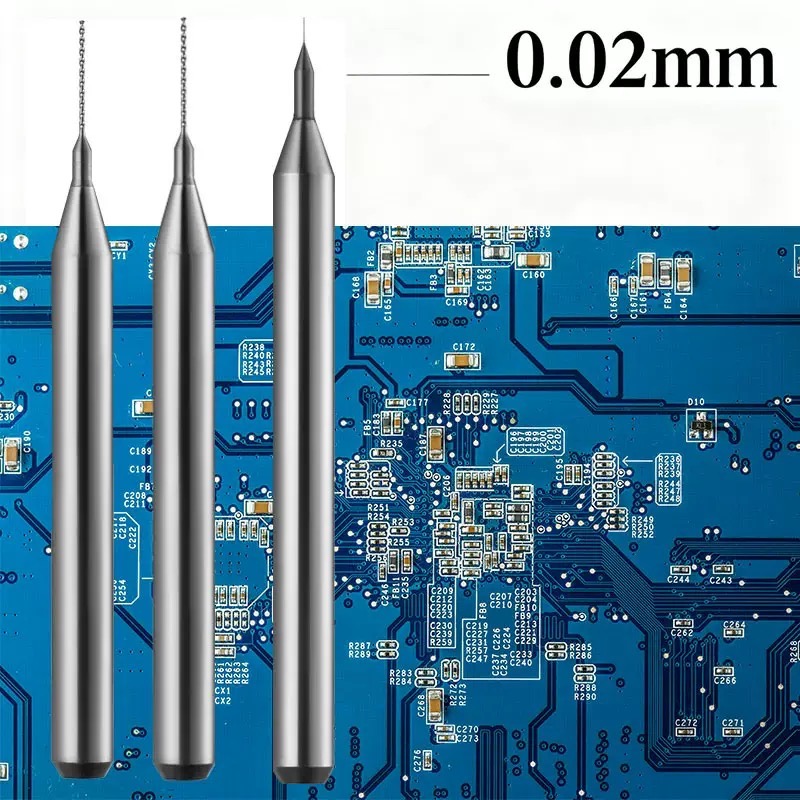
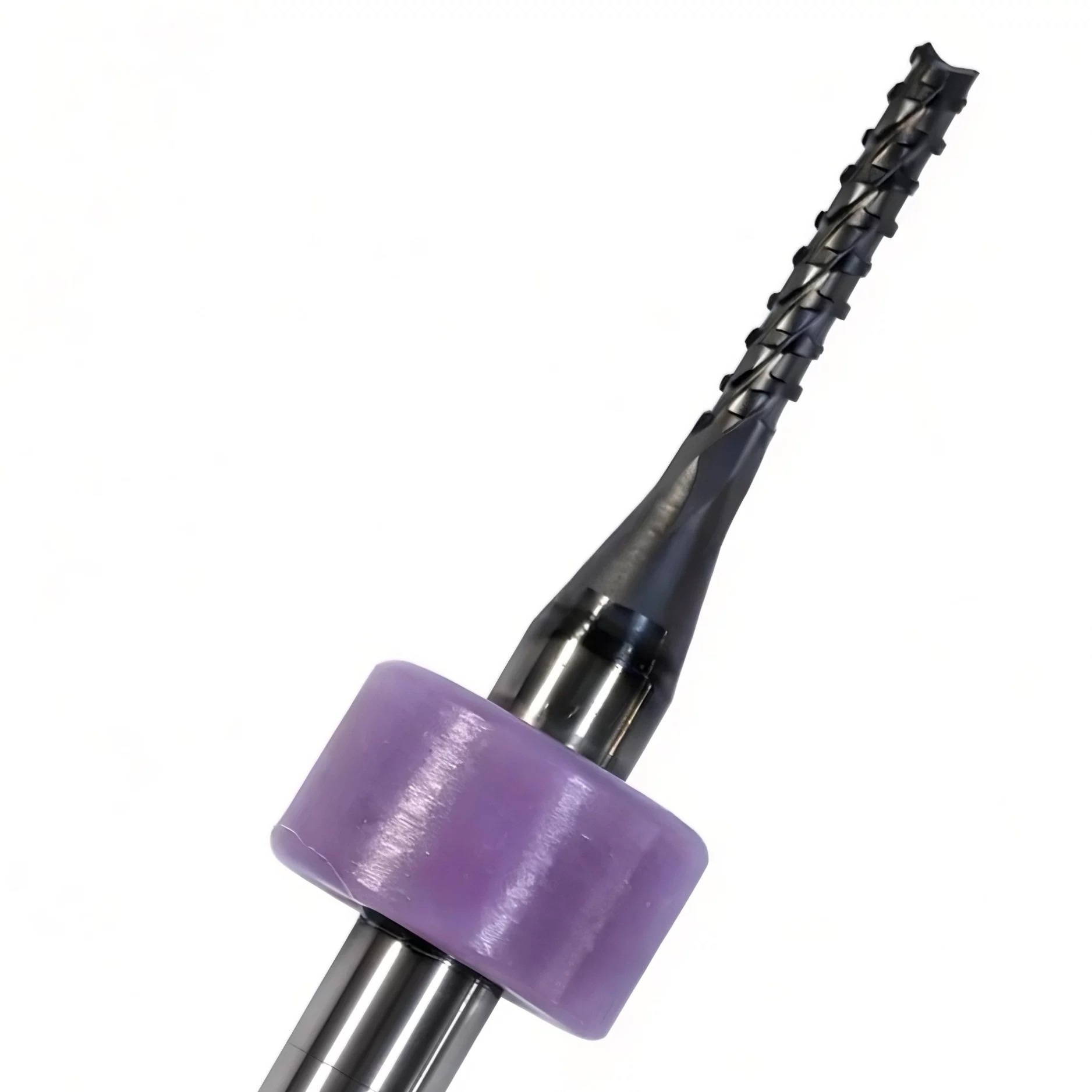
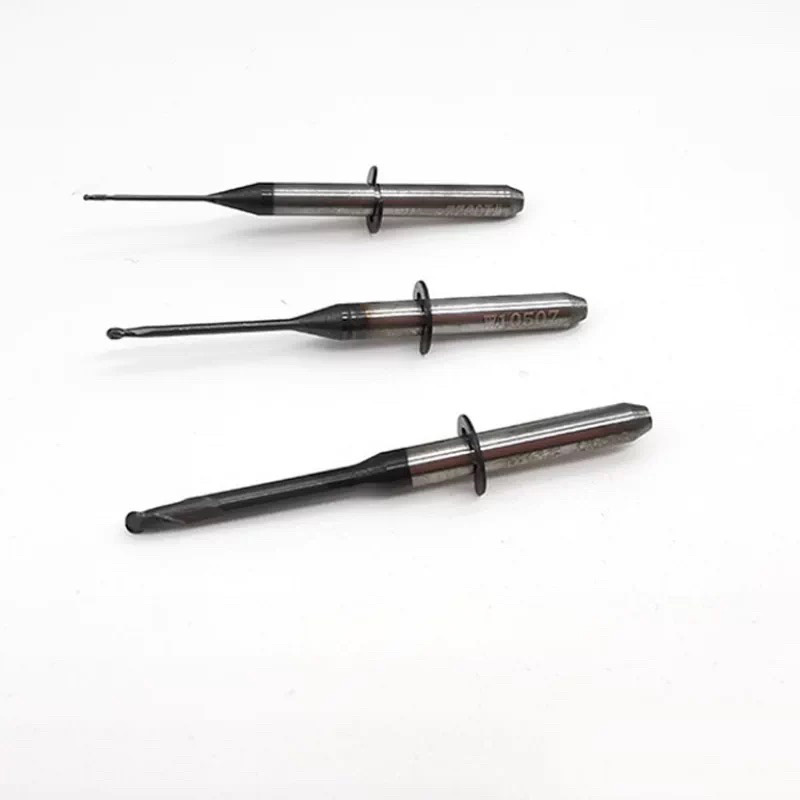
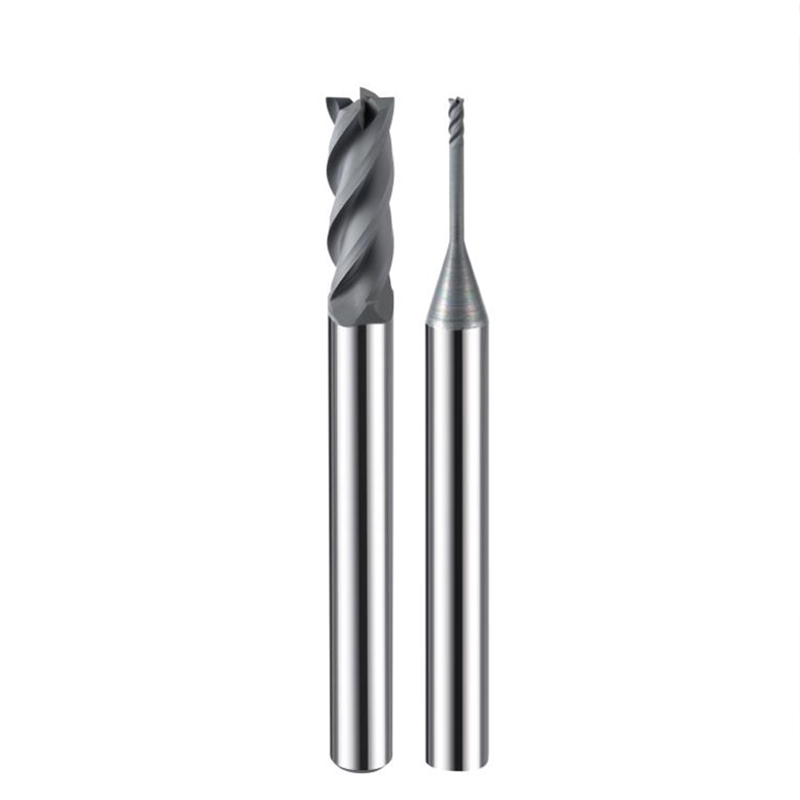
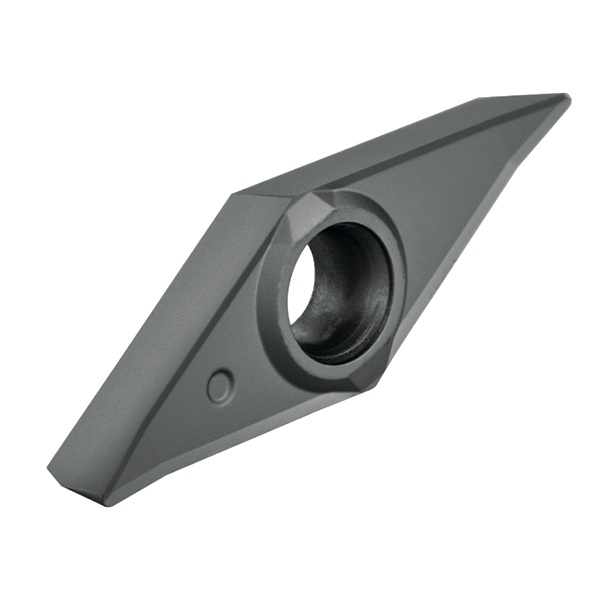
Graphite, Ceramics, and Carbon Fiber are the future, but they are “tool killers.” If you’re still using traditional coating, you’re fighting a losing battle.
Our CVD (Chemical Vapor Deposition) Diamond Coating creates a real crystalline diamond layer on the carbide substrate. This isn’t just a “finish”—it’s a shield.
Why top distributors choose our CVD series:
1.Ultra-Low Friction: Prevents chip welding and heat buildup.
2.Extreme Abrasion Resistance: Maintains sharp cutting edges $20 \times$ longer.
3.Surface Finish: Mirror-like results on the workpiece, zero secondary polishing needed.