Nullam dignissim, ante scelerisque the is euismod fermentum odio sem semper the is erat, a feugiat leo urna eget eros. Duis Aenean a imperdiet risus.
Nullam dignissim, ante scelerisque the is euismod fermentum odio sem semper the is erat, a feugiat leo urna eget eros. Duis Aenean a imperdiet risus.
 author
Choosing carbide cutting tool coatings starts with the workpiece, not the coating catalog. Steel, aluminum, graphite, CFRP, ceramics, and PCB laminates create different wear, heat, adhesion, and edge-retention problems. A coating that performs well on one material may fail quickly on another. For purchasing and process engineers, the practical task is to match material chemistry, abrasiveness, cutting temperature, tool geometry, and surface requirements before comparing tool price.

The best coating for carbide tools is the one that controls the dominant failure mode in your application. Hardness matters, but friction, heat flow, coating thickness, and chemical compatibility also affect tool performance. This is why carbide cutting tool coatings should be selected from the machining condition backward rather than from hardness alone.
TSHZ develops CVD diamond-coated cutting tools for abrasive and non-ferrous machining, including graphite tools, PCB micro drills, diamond-coated inserts, and custom profiles. Its product range is aimed at applications where ordinary carbide loses edge condition quickly, such as graphite, CFRP, high-silicon aluminum, ceramics, and glass-fiber PCB materials.
Diamond is not a universal coating. At elevated cutting temperatures, diamond has chemical affinity with iron, so it is not the preferred choice for hardened steel or stainless steel. Ferrous materials normally require a non-diamond coating strategy.
CVD diamond becomes much more relevant for abrasive non-ferrous and non-metallic materials. In those applications, the main problem is often rapid abrasive wear rather than chemical or thermal attack on the cutting edge.
TSHZ CVD diamond coatings are specified at about 9000–10000 HV, with a friction coefficient around 0.05–0.1 and thermal conductivity near 2000 W/(m·K).
These properties solve different machining problems. High hardness slows abrasive wear. Low friction helps control built-up edge and cutting resistance. Fast heat transfer helps move heat away from the cutting zone. Your coating decision should therefore focus on the failure that limits your current process.
CVD diamond coatings can be applied in controlled thicknesses of roughly 1–30 μm, so thickness and uniformity matter on micro tools, narrow flutes, and tight-tolerance profiles.
Excess coating on a small cutting edge can affect chip space or effective diameter. For PCB micro drills and small graphite end mills, coating quality is not simply a question of making the layer thicker. Edge geometry must remain suitable for chip evacuation and dimensional control.
Material matching is the core of carbide cutting tool coatings selection. The following table gives a practical direction rather than a universal rule.
| Workpiece Material | Main Machining Risk | Coating Direction |
| Steel and stainless steel | Heat and chemical interaction | Suitable non-diamond coating |
| Aluminum alloys | Adhesion and built-up edge | Low-friction coating |
| High-silicon aluminum | Adhesion and severe abrasion | Consider CVD diamond |
| Graphite | Rapid abrasive wear | CVD diamond |
| CFRP and abrasive composites | Fiber abrasion and delamination | CVD diamond where conditions allow |
| PCB laminates | Glass-fiber abrasion and hole-quality drift | Diamond-coated micro tools |
For steel and stainless steel, chemical compatibility matters more than simply choosing the hardest surface. Diamond can react unfavorably with iron at high cutting temperatures.
For these materials, select a non-diamond coating designed around heat resistance, oxidation resistance, and the actual cutting condition. This limitation is important because a harder coating is not automatically a better coating for every workpiece.
A practical carbide coating for aluminum should control material adhesion while preserving a clean cutting edge. High-silicon aluminum creates another problem because the silicon content increases abrasive wear.
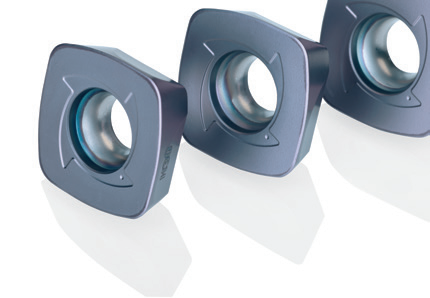
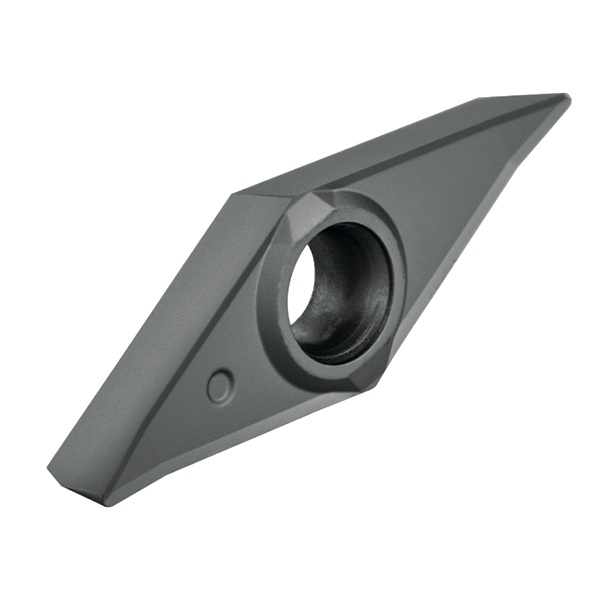
For this type of application, TSHZ Diamond-Coated Cutting Inserts can be considered when conventional carbide edges suffer from abrasion or built-up edge. The insert format is also useful when your production process depends on replaceable cutting edges and repeatable indexing.
Graphite, carbon-fiber composites, ceramics, and glass-fiber PCB materials can wear carbide edges rapidly even when cutting forces are moderate.
For diamond coating for graphite machining, the main value is maintaining cutting-edge geometry over a longer machining cycle. In comparable graphite applications, TSHZ lists tool-life improvements of roughly 3–18 times over ordinary carbide. PCB applications can show larger gains under suitable conditions.
This is where CVD diamond coated carbide tools have a clear technical role. Their value comes from controlling abrasive wear rather than simply increasing nominal hardness.

The purchase price of a coated tool does not show the full machining cost. For carbide cutting tool coatings, a better comparison includes tool life, machine stoppages, dimensional drift, scrap risk, and usable output per tool.
CVD diamond becomes easier to justify when abrasive wear already creates frequent tool changes or unstable part quality.
In graphite machining, TSHZ cites typical life improvements of about 3–18 times over ordinary carbide, depending on the tool and cutting condition. In specific PCB drilling applications, reported results reach 20–30 times.
These figures should not be treated as guarantees for every machine or material. They do show why cost per part is often more meaningful than price per tool. A more expensive tool can still reduce production cost if it delivers significantly more usable machining time.
Tool wear changes cutting diameter, corner geometry, cutting force, and surface condition.
In graphite electrode machining, progressive wear can create dimensional error near the end of a long program. In PCB drilling, worn edges can contribute to burrs, nail head, smear, and changes in hole-wall quality.
A coating that slows edge wear helps maintain more consistent machining conditions across a production run.
In one PCB application, TSHZ reports tool-change frequency reduced by about 90% and cost per hole reduced by roughly 20–30%.
The useful point is the calculation method. Purchasing teams should compare tool price, total output, changeover time, rejected work, and machine utilization together. This gives a more realistic picture of whether the coating is reducing production cost.
Once the coating direction is clear, tool geometry becomes the next decision. carbide cutting tool coatings cannot compensate for a cutting tool shape that does not suit the operation.
TSHZ offers several CVD Diamond-Coated Cutting Tools for different machining patterns, so the product should be selected around both workpiece material and cutting task.
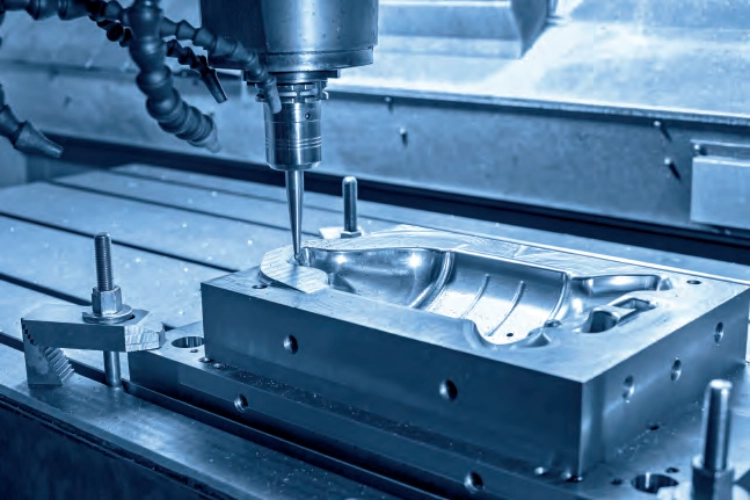
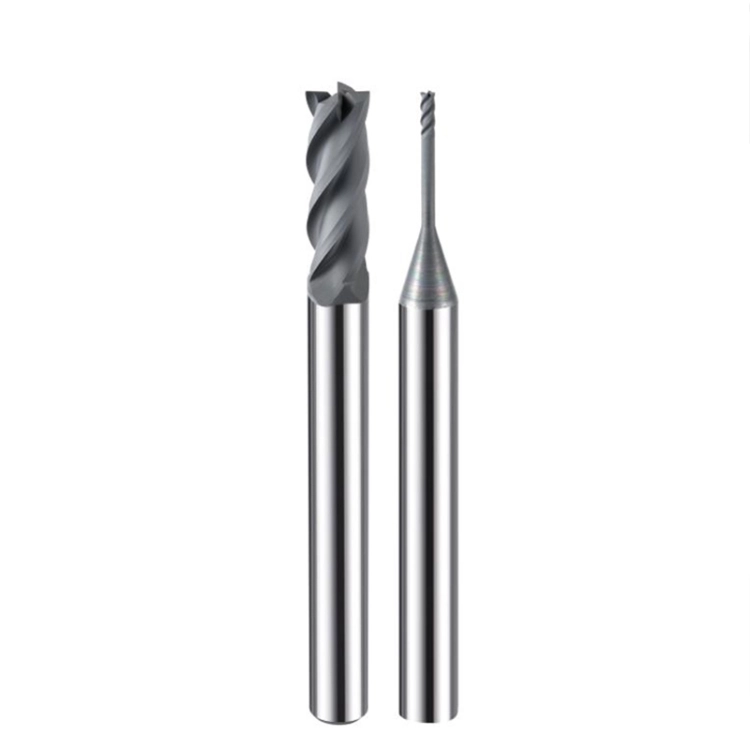
For flat surfaces, pockets, slots, and general graphite electrode machining, a Diamond Coating Flat-Bottom Cylindrical End Mill is a practical option.
Its geometry supports dimensional milling, while the diamond coating addresses graphite’s abrasive wear. If an ordinary carbide end mill progressively loses diameter during a long graphite program, improving wear resistance and tool geometry together is usually more useful than simply scheduling more frequent tool changes.
Diamond-coated inserts suit processes that rely on replaceable cutting edges, profile control, or repeatable indexing.
For high-silicon aluminum, graphite, ceramics, and hard composites, the combination of a carbide substrate and CVD diamond surface can help where abrasion or built-up edge shortens useful cutting time. The application still needs to be checked for material compatibility, cutting temperature, and edge geometry.
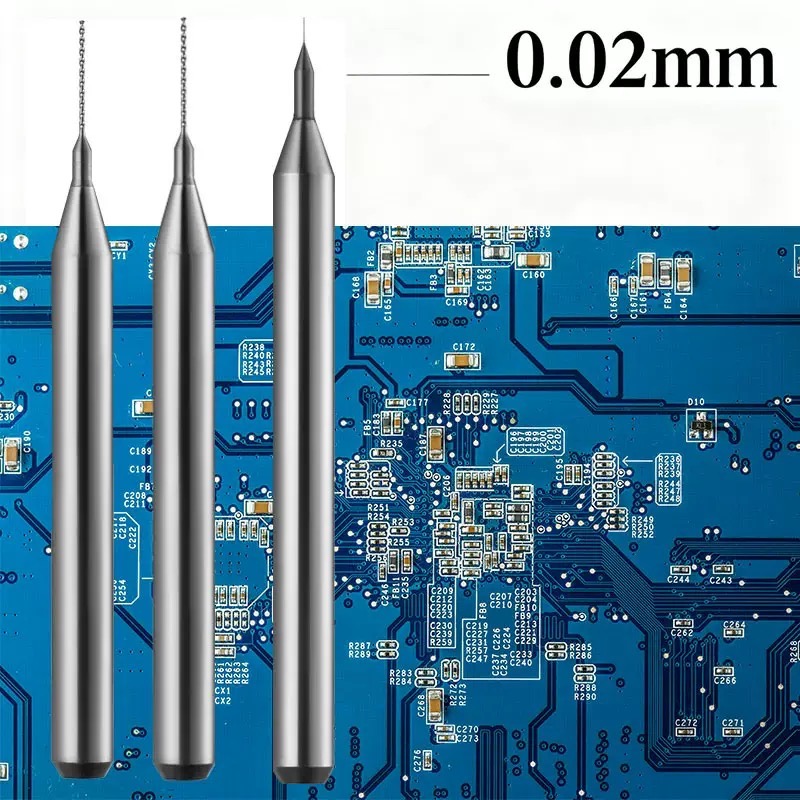
FR-4, HDI, and multilayer boards contain glass fiber, resin, and copper. That combination creates continuous abrasive wear, so cutting-edge condition directly affects hole quality.
TSHZ PCB Diamond Drill Bit products are intended for this machining environment. A sound PCB diamond drill bit selection process should consider finished hole size, plating compensation, board stack, tool length, chip evacuation, and spindle condition rather than choosing diameter alone.
A coating purchase should begin with machining data. Before comparing carbide cutting tool coatings, define the material grade, tool diameter, cutting length, machine condition, operation type, required surface condition, and current failure mode.
This helps determine whether the real problem comes from coating wear, unsuitable geometry, poor rigidity, or machining parameters.
Give the supplier the exact workpiece material rather than a broad description such as “aluminum” or “composite.” High-silicon aluminum behaves differently from softer aluminum grades, and composite structures can vary significantly.
Also provide the current tool specification or drawing, roughing or finishing requirement, target surface condition, and the failure you want to eliminate. Tool selection becomes much more accurate when the failure mode is clearly defined.
For narrow spaces, special contours, non-standard diameters, or combined machining features, TSHZ offers a Custom Profile service.
The useful approach is to treat substrate, cutting-edge geometry, coating thickness, and application requirements as one design problem. This is especially relevant for abrasive materials where a small geometric change can affect chip evacuation, rigidity, or edge stability.
If you are comparing standard CVD Diamond-Coated Cutting Tools with a custom profile, prepare your workpiece material, existing tool specification, drawing, spindle information, current tool life, and observed failure mode.
The right carbide cutting tool coatings are the ones that match the material, cutting condition, geometry, and production economics rather than simply offering the highest hardness.
For project-specific selection, use the TSHZ contact page to send your machining details. A useful request should state the material, tool geometry, current wear problem, required finish, and production objective so the coating and tool form can be evaluated together.
Which carbide cutting tool coatings are suitable for graphite machining?
CVD diamond is well suited to graphite because graphite is highly abrasive. The coating’s hardness and low friction help slow edge wear and support dimensional consistency during longer milling cycles.
Can CVD diamond-coated carbide tools be used for stainless steel?
They are generally not preferred for high-temperature machining of stainless steel or other iron-based materials because diamond has chemical affinity with iron. A suitable non-diamond coating strategy is normally more appropriate.
How do I decide whether a diamond coating is worth the higher tool price?
Compare cost per part or cost per hole rather than purchase price alone. Include tool life, tool-change time, machine stoppages, scrap risk, and surface-quality stability. If abrasive wear is the main source of downtime or process variation, CVD diamond may reduce total machining cost.
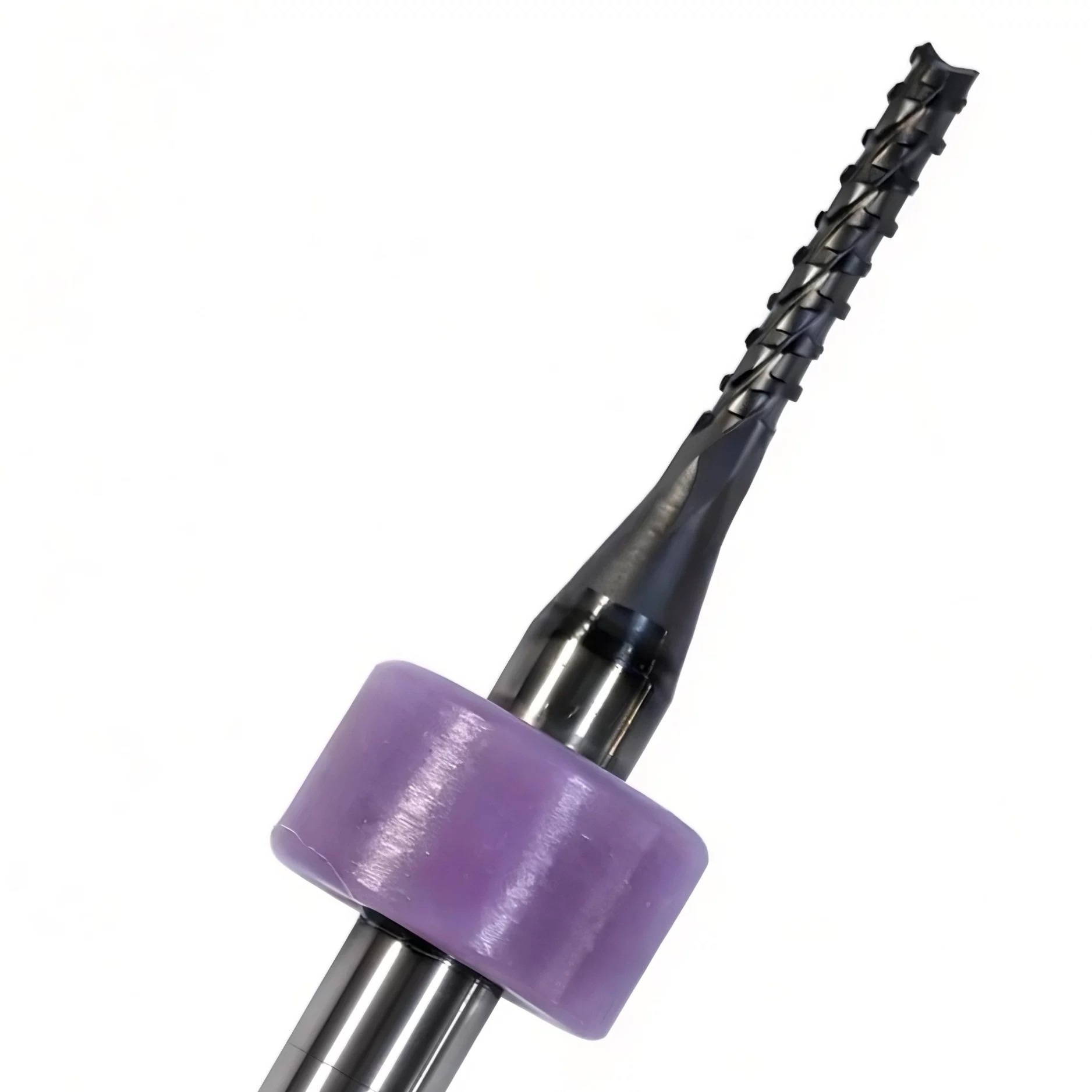
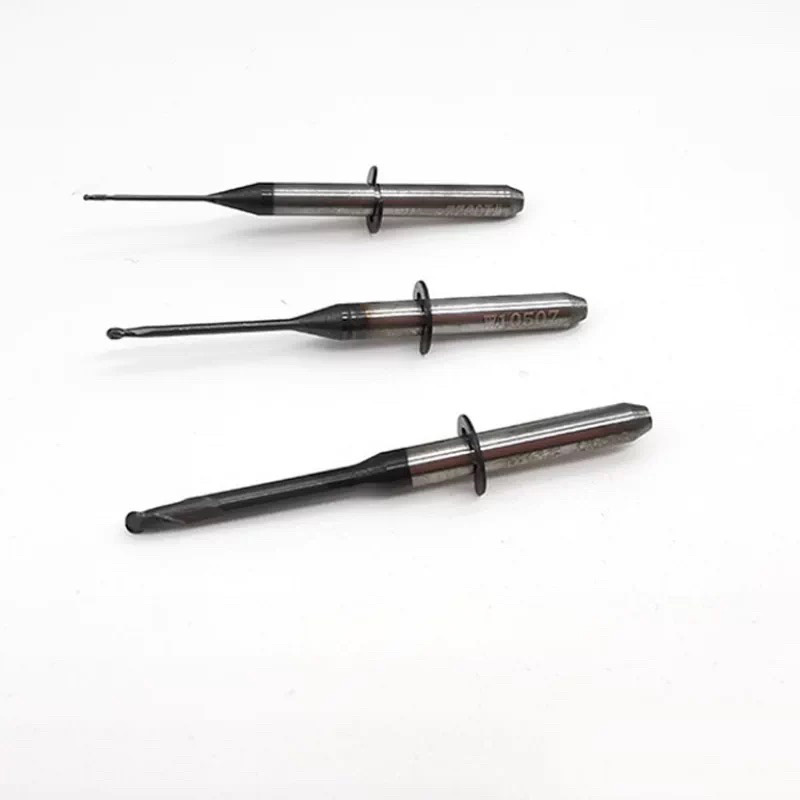
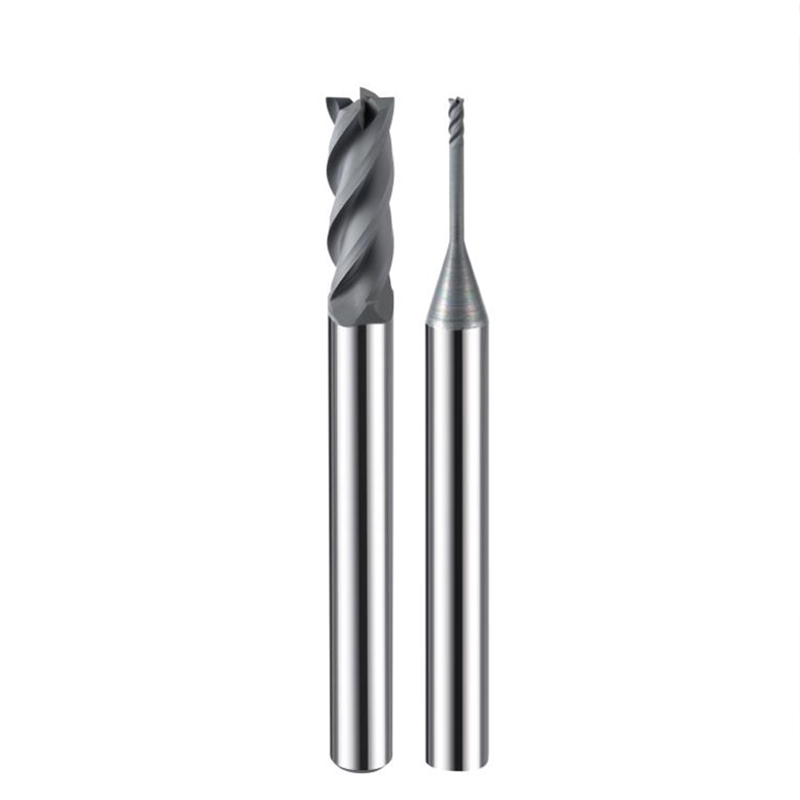
Graphite, Ceramics, and Carbon Fiber are the future, but they are “tool killers.” If you’re still using traditional coating, you’re fighting a losing battle.
Our CVD (Chemical Vapor Deposition) Diamond Coating creates a real crystalline diamond layer on the carbide substrate. This isn’t just a “finish”—it’s a shield.
Why top distributors choose our CVD series:
1.Ultra-Low Friction: Prevents chip welding and heat buildup.
2.Extreme Abrasion Resistance: Maintains sharp cutting edges $20 \times$ longer.
3.Surface Finish: Mirror-like results on the workpiece, zero secondary polishing needed.