Nullam dignissim, ante scelerisque the is euismod fermentum odio sem semper the is erat, a feugiat leo urna eget eros. Duis Aenean a imperdiet risus.
Nullam dignissim, ante scelerisque the is euismod fermentum odio sem semper the is erat, a feugiat leo urna eget eros. Duis Aenean a imperdiet risus.
 author
Abrasive materials do not fail a cutting tool slowly. They grind the cutting edge during every pass, widen the wear land, raise cutting heat, and finally make the tool lose size control. That is why diamond coated end mills are widely used in graphite, CFRP, ceramic composites, high-silicon aluminum, and other difficult non-ferrous materials.
TSHZ focuses on CVD diamond coated cutting tools for precision machining. Its end mill range includes ball nose, flat-bottom cylindrical, and round nose designs for different material removal and finishing tasks. For buyers, the point is not only whether a tool is hard. The real question is whether the coating, edge geometry, flute design, and application match the material being cut.
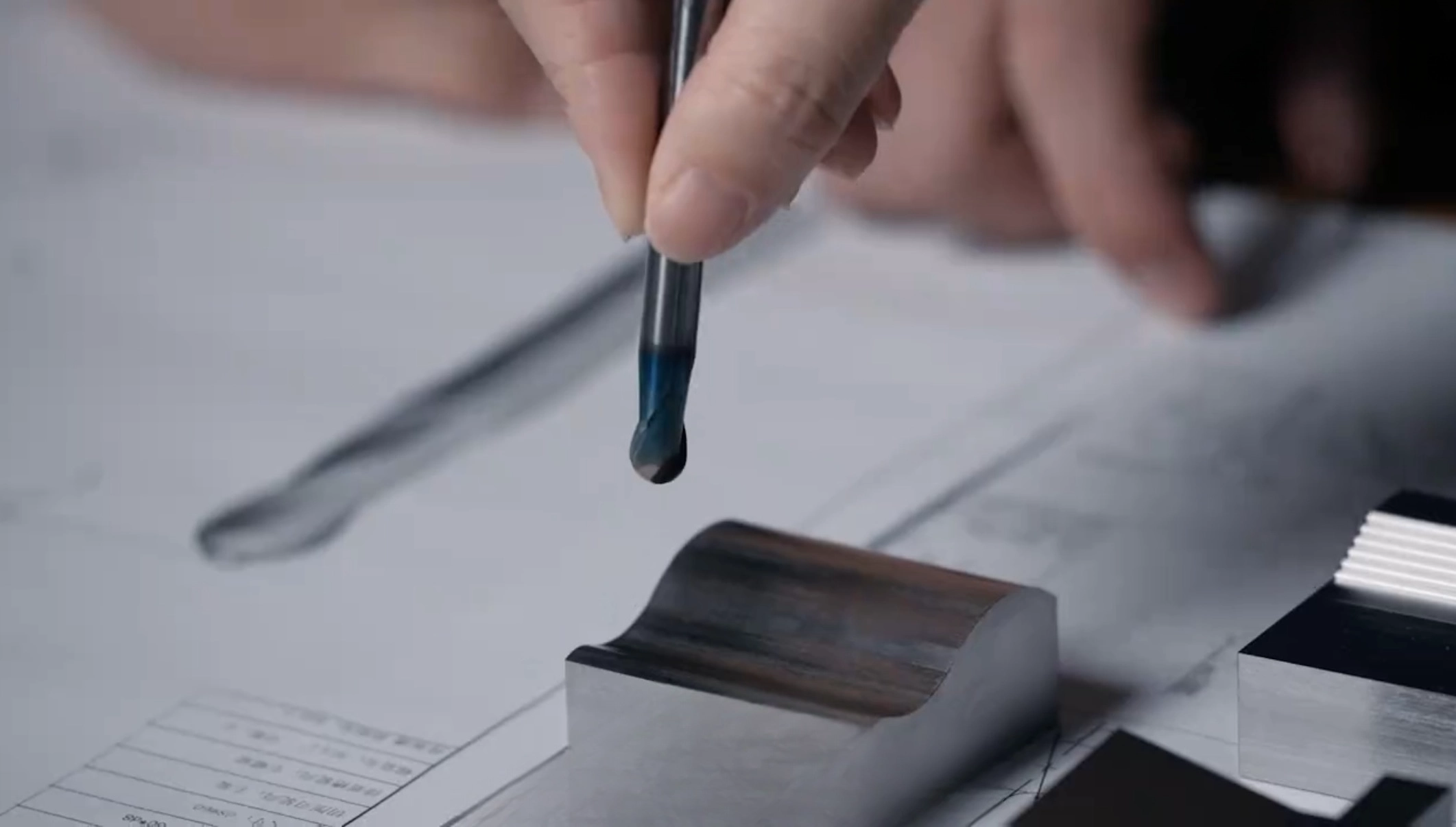
Before choosing CVD diamond coated end mills, buyers need to look at how abrasive wear happens. Graphite, glass fiber, carbon fiber, ceramics, and high-silicon aluminum do not behave like easy-cutting metals. They attack the tool edge mechanically, and once the edge is rounded, surface finish and dimensional accuracy begin to drift.
In graphite machining, the material is soft to the touch but highly abrasive during cutting. Fine graphite particles rub against the flute and edge like powdery grinding media. CFRP and glass fiber composites create a similar problem, because the fibers scrape the tool edge instead of forming clean metal chips.
For ordinary carbide tools, the cutting edge may still look usable, but the diameter can already be smaller than planned. In mold electrodes, narrow slots, and 3D cavity work, that small change can become a visible size error.
Friction is another reason standard tools fail early. As the edge wears, cutting force rises, heat builds up, and the tool becomes less stable. In non-ferrous machining, poor surface behavior can also increase material sticking, which affects the machined finish and chip flow.
CVD diamond coating helps because diamond has very low friction and strong heat transfer. Instead of allowing heat to stay at the cutting edge, the coating helps move it away from the contact zone.
A tool does not need to break to create waste. In long cutting runs, gradual edge wear can change the actual cutting diameter. This matters in graphite electrodes, mold cavities, thin-wall features, and batch CNC production.
For buyers comparing diamond coated end mills, tool life should be judged together with size stability. A tool that keeps its geometry longer can reduce repeated offset correction and inspection pressure.
The longer life of CVD tools comes from a combination of coating material, coating adhesion, heat behavior, and geometry coverage. A diamond layer only works well if it stays bonded to the carbide substrate and covers the cutting area evenly.
CVD diamond coating is grown on the tool surface by chemical vapor deposition. It is not only a black decorative coating. The process forms a real diamond crystal layer on the cutting edge.
Knowledge base data shows CVD diamond coating can reach about 9000–10000 HV. That level of hardness gives the tool strong resistance against abrasive particles in graphite, ceramic composites, and fiber-reinforced materials. For abrasive material machining, this is the main reason CVD tools keep a usable edge longer than standard carbide.
CVD diamond coating also has a low friction coefficient, about 0.05–0.1 in the provided TSHZ material. Lower friction means less cutting resistance, cleaner chip movement, and less heat generated at the edge.
Its thermal conductivity is also high, around 2000 W/(m·K). In practical terms, this helps protect the carbide body from thermal stress during fast cutting or dry machining of abrasive non-metallic materials.
End mills are not flat plates. They have flutes, cutting edges, corners, necks, and R profiles. CVD coating must cover these areas without blocking chip flow or changing the tool geometry too much.
TSHZ knowledge base notes that CVD coating thickness can be controlled in the 1–30 μm range. For precision end mills, this matters because excessive or uneven coating may affect sharpness, chip evacuation, and final size.
The right tool depends on the cut. Roughing, slotting, bottom finishing, corner work, and 3D surface finishing need different geometries. This is where TSHZ product selection should be tied to the buyer’s real machining task, not only the material name.
| Machining Need | Suggested TSHZ Product | Practical Reason |
| Flat bottoms, slots, and electrode roughing | Flat-bottom cylindrical end mill | Stable bottom cutting and controlled material removal |
| Cavity roughing and corner protection | Round Nose End Mill | Stronger corner behavior than a sharp edge |
| 3D surfaces and R-profile finishing | Ball Nose End Mill | Better contact for curved profiles and finishing paths |
For graphite electrode shops and mold factories, the Diamond coating Flat-bottom cylindrical end mill is the most direct option for flat-bottom machining, slotting, roughing, and semi-finishing.
This type of flat-bottom diamond coated end mill is useful where the final bottom surface needs to remain clean and the tool must keep its diameter through a long toolpath. For graphite machining end mills, edge wear is not just a tool cost issue. It directly affects electrode size, corner accuracy, and later EDM quality.
Sharp corners are weak points in abrasive cutting. If the work involves cavity roughing, transitions, or corner areas, the Diamond coating Round Nose End Mill is easier to justify than a sharp flat tool.
A round nose diamond coated end mill spreads cutting pressure more gently around the corner radius. That can help reduce edge chipping and improve tool-tip stability in graphite molds, CFRP parts, and other abrasive materials.
For curved cavities, R profiles, graphite molds, and contour finishing, the Diamond coating Ball Nose End Mill fits the job better. A diamond coated ball nose end mill keeps smoother contact with 3D surfaces and supports more stable finishing passes.
This tool is especially relevant when surface finish and profile consistency matter more than fast stock removal. In CFRP contour work, a stable cutting edge can also help reduce burrs and fiber damage.

Many buyers first compare tool unit price. That is understandable, but it is not enough for CVD diamond coated end mills. In abrasive work, the larger cost often comes from tool changes, inspection, rework, unstable dimensions, and machine stoppage.
A cheaper tool can become expensive if it wears quickly and forces the operator to stop the machine often. In the provided TSHZ knowledge base, CVD diamond coated tools can reduce single part or hole cost by 20%–30% in suitable applications.
For a buyer, the better calculation is simple: tool price, tool life, number of parts, scrap risk, and downtime. This gives a more realistic view than price per piece.
Longer tool life helps CNC lines run with fewer interruptions. The TSHZ knowledge base notes that reduced tool changes can save about 90% of tool-change downtime in certain use cases.
This is especially useful for mold shops and graphite electrode suppliers that run repeated programs. Less tool changing also means fewer chances for tool length errors, offset mistakes, or unstable restarts.
Surface finish is not only about appearance. In graphite electrodes, a worn tool can leave edge defects or dimensional drift. In composites, a dull tool may increase burrs, tearing, or fiber pull-out.
This is why diamond coated end mills are often purchased for process stability, not just longer service life. The tool should keep cutting predictably from the first workpiece to the last acceptable part in the batch.
A buyer should consider TSHZ when the machining problem is linked to abrasive wear, unstable tool life, edge chipping, poor finish, or frequent tool changes. The final choice should start from material, machining allowance, surface requirement, and machine condition.
Different abrasive materials need different thinking. Graphite requires strong wear resistance and clean edges. CFRP needs sharp cutting and control of burrs or delamination. Ceramic composites need edge stability. High-silicon aluminum needs low friction to reduce sticking.
TSHZ can match tool type to these material behaviors rather than offering one general tool for every cut.
For bottom surfaces and slots, choose the flat-bottom cylindrical end mill. For cavity roughing and stronger corners, choose the round nose design. For curved profiles and fine 3D finishing, choose the ball nose design.
This geometry-based selection makes the article’s main point practical: coating extends life, but geometry decides whether that life is useful in the real cut.
For procurement teams, the safest next step is to prepare the material grade, drawing, machine type, current tool life, and main failure mode. TSHZ can then review whether the issue is coating wear, tool geometry, cutting parameters, or material behavior. For drawings, sample requirements, or tool selection questions, use the TSHZ contact page and describe the machining problem clearly.
Q: Are diamond coated end mills suitable for cutting steel?
A: Usually no. Diamond coating is mainly used for graphite, CFRP, ceramics, high-silicon aluminum, PCB-related composites, and other abrasive non-ferrous materials. For steel or stainless steel, diamond can react poorly at high cutting temperatures, so another coating system is normally required.
Q: How should I choose between flat-bottom, round nose, and ball nose end mills?
A: Use a flat-bottom tool for slots, bottom surfaces, and general graphite roughing. Use a round nose tool when the corner area needs more strength. Use a ball nose tool for 3D surfaces, curved mold cavities, and fine finishing.
Q: Why do diamond coated end mills cost more but still reduce machining cost?
A: The unit price is higher, but the tool can run longer in abrasive materials, reduce tool-change downtime, and keep dimensions more stable. For factories machining graphite, CFRP, or ceramic composites, the real value is lower cost per acceptable part, not the lowest tool price.
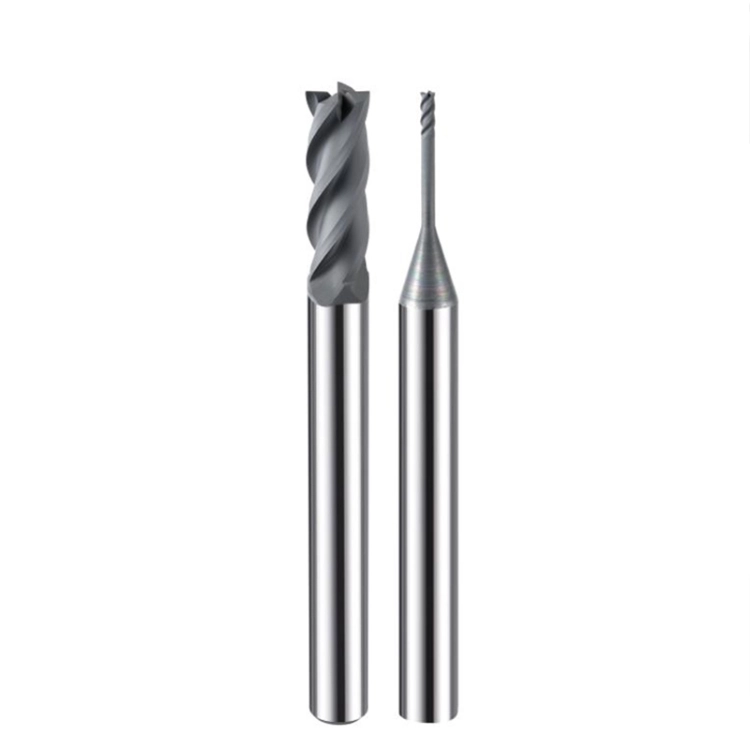
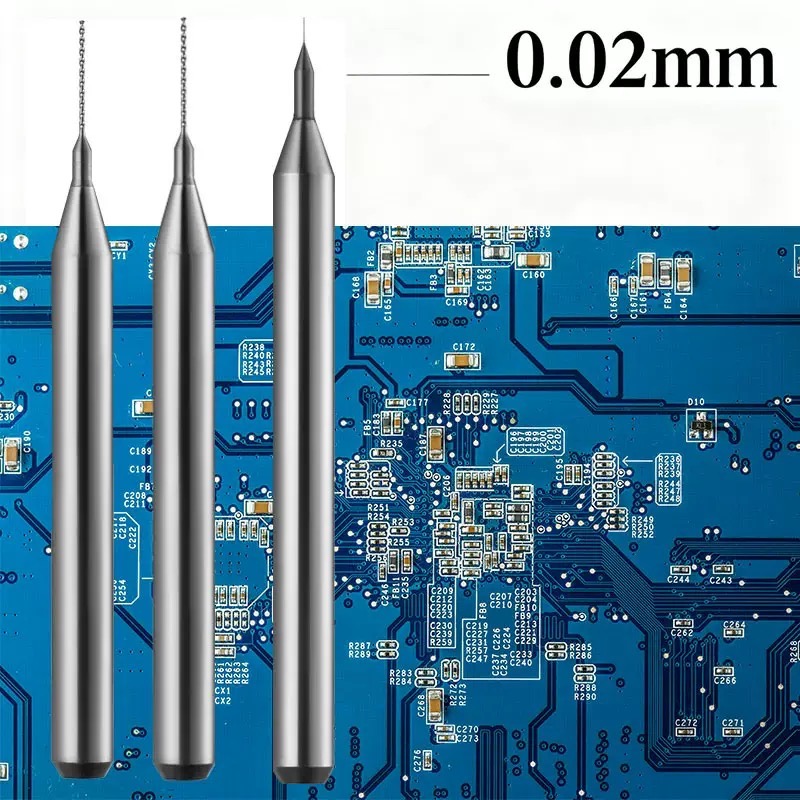
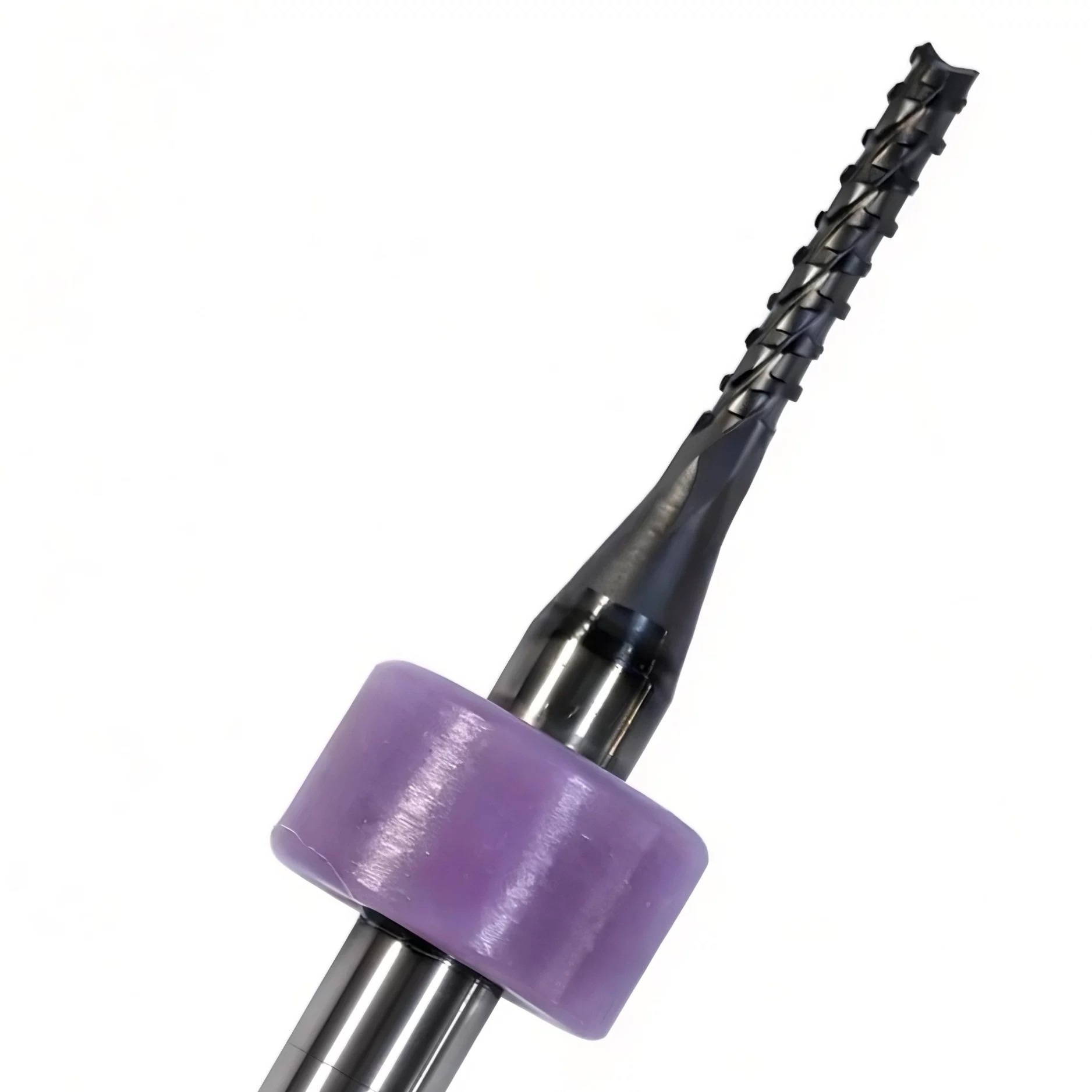
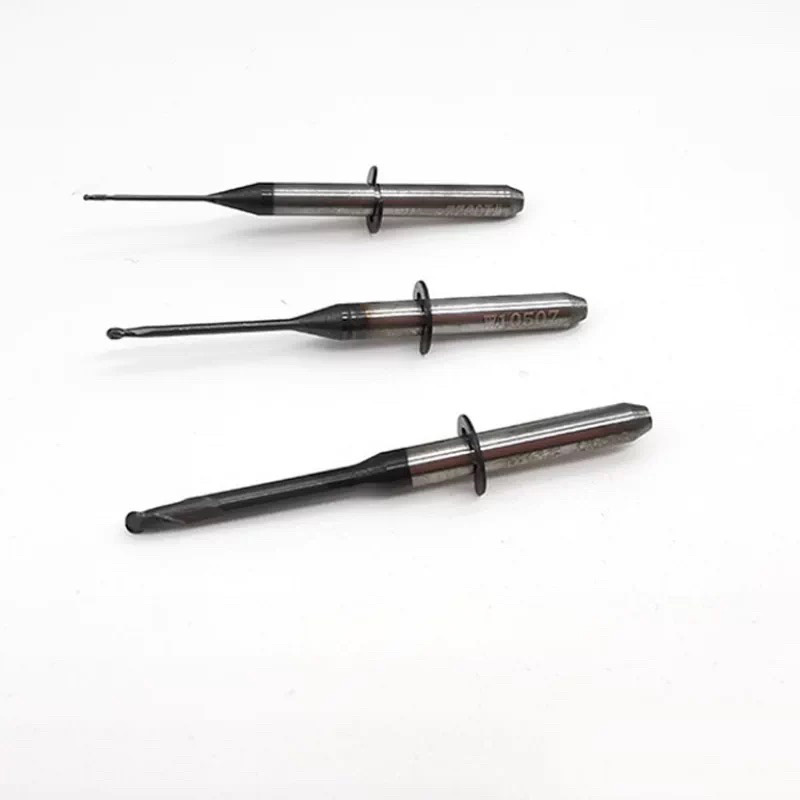
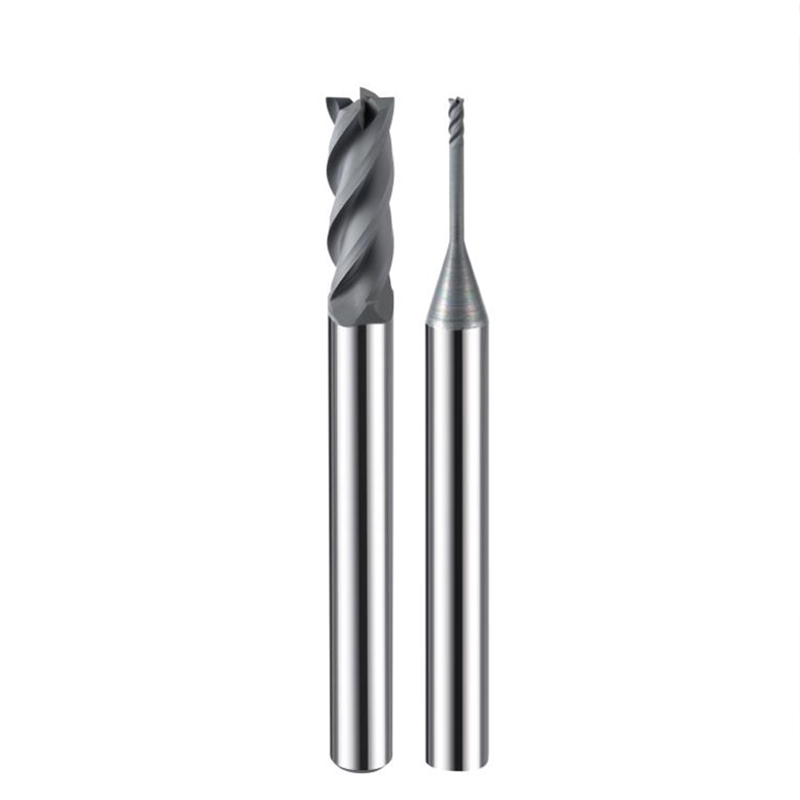
Graphite, Ceramics, and Carbon Fiber are the future, but they are “tool killers.” If you’re still using traditional coating, you’re fighting a losing battle.
Our CVD (Chemical Vapor Deposition) Diamond Coating creates a real crystalline diamond layer on the carbide substrate. This isn’t just a “finish”—it’s a shield.
Why top distributors choose our CVD series:
1.Ultra-Low Friction: Prevents chip welding and heat buildup.
2.Extreme Abrasion Resistance: Maintains sharp cutting edges $20 \times$ longer.
3.Surface Finish: Mirror-like results on the workpiece, zero secondary polishing needed.