< img height="1" width="1" style="display:none" src="https://www.facebook.com/tr?id=26825290190466607&ev=PageView&noscript=1" />

Nullam dignissim, ante scelerisque the is euismod fermentum odio sem semper the is erat, a feugiat leo urna eget eros. Duis Aenean a imperdiet risus.

How To Choose a Diamond Cutting Tool for Precision Jewelry Cutting and Engraving

  • How To Choose a Diamond Cutting Tool for Precision Jewelry Cutting and Engraving author
  • 3rd July 2026

In jewelry cutting and engraving, the problem is often not the machine. It is the tool. A wrong edge shape can leave burrs, shallow grooves, soft corners, or tool marks on a part that is already expensive to make. So a diamond cutting tool should not be chosen only because it is hard. Buyers also need to check the tool profile, coating condition, material fit, cutting path, and finishing target.

TSHZ supplies CVD diamond-coated cutting tools and custom tool solutions for precision machining. For jewelry-related work, its tools can be considered for curved surfaces, detail engraving, cavity transitions, and special profiles. If you are looking for a diamond cutting tool for precision jewelry cutting, the first step is to match the tool to the actual part, not to a general product name.

How to Choose a Diamond Cutting Tool for Precision Jewelry Cutting and Engraving

Why Does Tool Choice Matter in Precision Jewelry Cutting?

Jewelry parts are small, but the machining problems are easy to see. A tiny burr around a groove, a rough curve on a ring, or an uneven engraved line can add polishing work. In some cases, polishing can also change the detail that the cutting process was supposed to protect.

Small Details Decide Final Jewelry Quality

Fine jewelry work depends on clean lines and stable shapes. If the tool edge wears too fast, the same program may produce different results after several parts. This matters for repeated textures, mold details, small decorative grooves, and parts that need a clear edge after finishing.

Cutting Stability Affects Shape Accuracy

The machine follows the program, but the tool decides how the material is actually removed. If the cutter does not suit the shape, you may see rounded details, uneven depth, or rough transitions. For batch work, this can become a quality control issue, not just a cutting issue.

Surface Finish Reduces Polishing Work

A better machined surface means less hand finishing. That helps keep fine lines, sharp decoration, and original geometry. A low-cost tool may look cheaper at first, but if it leaves marks or burrs, the cost moves to polishing, inspection, and rework.

How Does a Diamond Cutting Tool Improve Jewelry Engraving Precision?

A diamond cutting tool helps mainly through wear resistance, lower friction, and edge stability. These are not just technical words. In the workshop, they show up as cleaner grooves, fewer burrs, more stable width, and less tool change during repeated cutting.

Hard Coating for Longer Edge Life

CVD diamond coating helps protect the cutting edge in difficult machining conditions. When the edge holds longer, the tool is less likely to rub the surface or lose its original profile. This is useful for repeated jewelry details where one sample is not enough. The buyer needs stable output across the order.

Low Friction for Cleaner Cutting

Friction can cause heat, material sticking, and rough surface marks. A lower-friction tool cuts more cleanly around small edges and fine decorative areas. If burrs keep appearing, do not only adjust feed and speed. Check whether the tool shape and coating condition suit the material and cut.

Stable Geometry for Repeated Accuracy

Precision is not a single good part. It is repeatable output. A stable cutting edge helps keep the same shape across several passes and several parts. For factories and tool distributors, this matters because customers judge the finished part, not the tool description.

Which TSHZ Diamond Cutting Tool Fits Each Jewelry Machining Task?

Different jewelry features need different tool shapes. Curved areas, corner transitions, cavities, and non-standard profiles should not all be machined with one cutter. This is where product matching becomes more useful than a general tool recommendation.

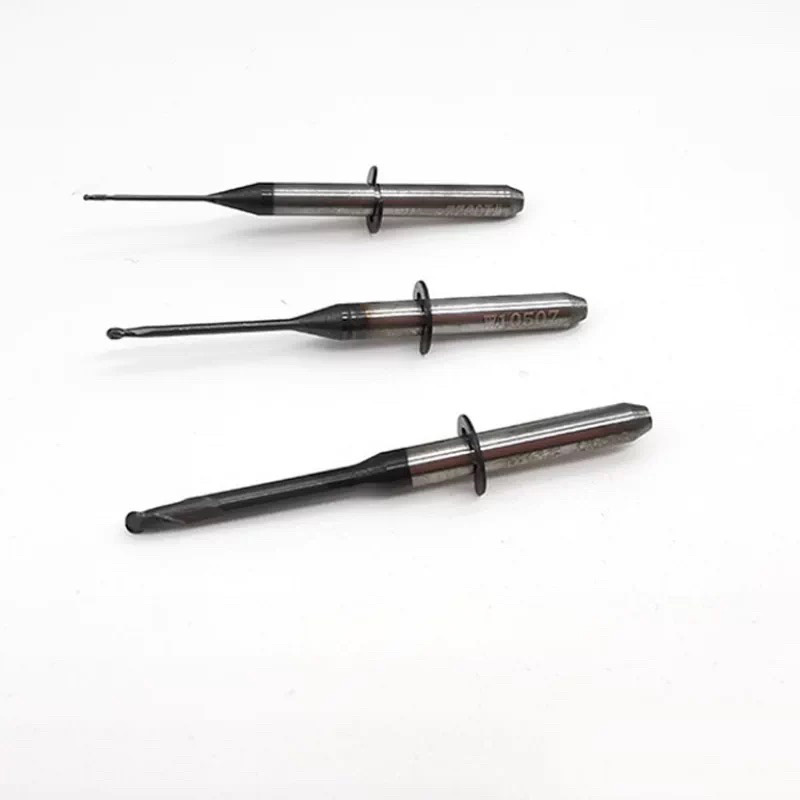
Ball Nose End Mill for Curved Surfaces and 3D Details

For ring curves, relief textures, raised patterns, and mold cavity finishing, the Diamond coating Ball Nose End Mill is a practical option. Its rounded profile is suitable for smooth transitions and 3D contour work. If the part has visible curved surfaces and you want to reduce tool marks before polishing, this tool type is a good place to start.

Round Nose End Mill for Edge Strength and Smooth Transitions

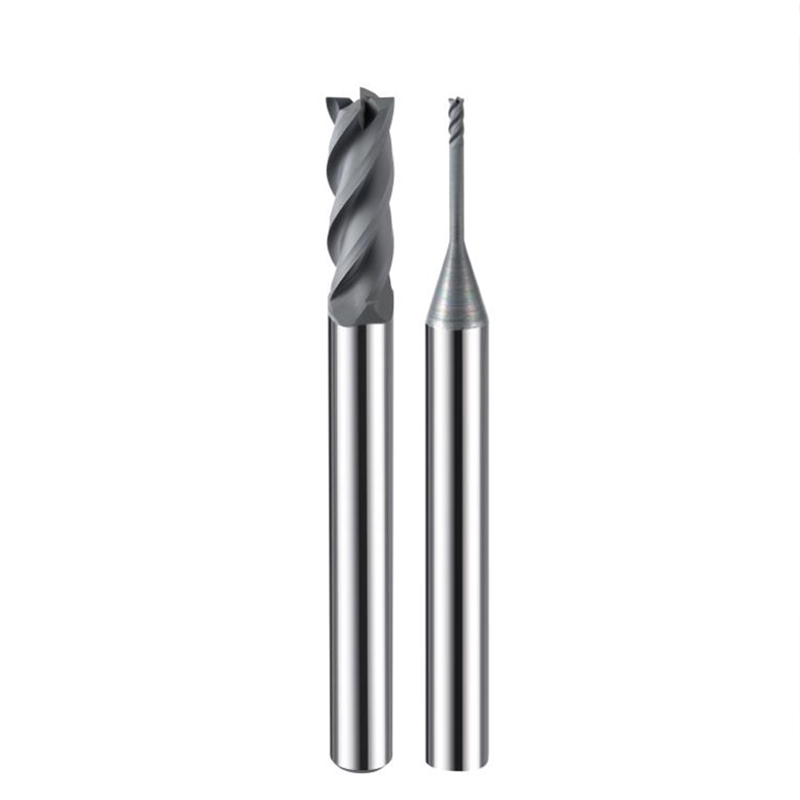
The Diamond coating Round Nose End Mill is more suitable when the part has small cavities, edge transitions, or areas where a sharp corner may wear or chip too soon. It can help when the work needs better corner support and a smoother change between surfaces. For buyers comparing diamond cutting tools vs carbide tools for jewelry, the real question is not only hardness. It is whether the tool can keep the surface and edge quality stable for the job.

Custom Diamond-Coated Tool Service for Special Jewelry Designs

Some drawings do not fit standard cutters well. Narrow grooves, special ring profiles, branded patterns, and unusual material behavior may need a tool made around the part. TSHZ’s Custom diamond-coated tool service in any form is more suitable when repeated testing with standard tools still gives burrs, poor edge shape, or unstable finish.

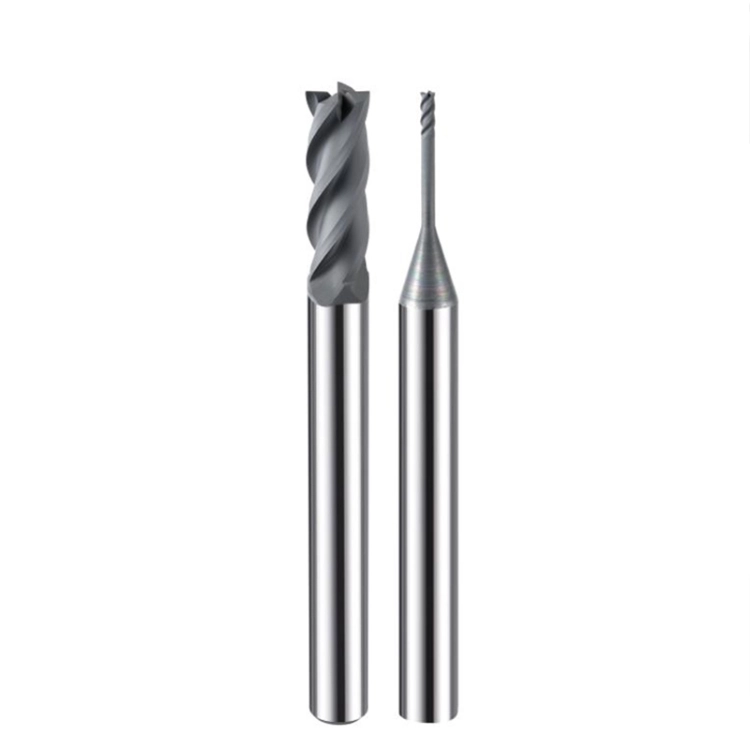
Diamond coating Round Nose End Mill

How Should Buyers Avoid the Wrong Tool Choice?

The safest way is to start with the part geometry. After that, check material, machine condition, finish target, and batch requirement. This is the real logic behind how to choose a diamond cutting tool for jewelry engraving.

Match Tool Shape to Jewelry Geometry

Use a ball nose profile for curved contours and 3D details. Use a round nose profile when edge transition and corner strength matter more. If the part has a special profile or standard tools keep failing, custom tooling should be considered before more trial cutting.

Compare Finish Quality, Tool Life, and Cost per Part

Tool price alone can be misleading. A cheaper cutter may require more polishing, more inspection, or more frequent replacement. For purchasing, compare how long the tool keeps its edge, how stable the surface finish is, and how much rework appears after machining.

Wrong Tool Choice Creates Rework

A wrong tool may still cut the part, but the hidden cost comes later. The surface may need extra polishing. The groove width may change across the batch. A corner may chip during cavity machining. By the time the problem is found, the material has already been cut. That is why tool selection should happen before sampling, not after repeated failure.

When Should You Ask for Custom Tool Support?

Custom tools are not necessary for every job. They become useful when the standard cutter cannot hold the profile, edge quality, or repeatability required by the part. If the same problem appears again and again, the issue may be the tool geometry.

Non-Standard Jewelry Profiles

Custom support is useful for special ring shapes, decorative patterns, internal grooves, and mold details that need a specific edge form. Instead of forcing the process to match a catalog cutter, the tool can be made closer to the actual machining need.

Project Details Needed Before Tool Selection

Before asking for a custom tool, prepare the drawing, workpiece material, machine type, current cutter, cutting problem, tolerance target, and expected surface finish. Photos of burrs, tool marks, chipping, or worn tools are also helpful. If the project needs a CNC diamond cutting tool for jewelry engraving, include the tool path style, spindle condition, and cutting environment.

A Practical Selection Summary

For curved surfaces, 3D contours, and relief details, start with the Diamond coating Ball Nose End Mill. For small cavities, edge transitions, and corner areas, the Diamond coating Round Nose End Mill is easier to justify. For special profiles, narrow grooves, unusual material behavior, or repeated quality issues, custom diamond-coated tooling should be discussed early.

If your project has burrs, unstable engraving depth, short tool life, or surface marks that standard cutters cannot solve, prepare the drawing, material, machine details, and current process notes before you contact TSHZ. Clear information helps both sides judge which diamond cutting tool format is more suitable.

FAQ

Q: Which diamond cutting tool is suitable for curved jewelry surfaces?
A: For curved surfaces, ring profiles, relief textures, and 3D details, a ball nose end mill is usually a practical option. The rounded profile supports smoother transitions and fine contour finishing.

Q: How can buyers reduce burrs in jewelry machining with diamond tools?
A: For how to reduce burrs in jewelry machining with diamond tools, check tool shape, edge condition, coating wear, feed stability, and whether the cutter matches the area being machined. Burrs often come from a mismatch between tool, material, and cutting path.

Q: When should a buyer choose a custom diamond-coated tool instead of a standard one?
A: Choose a custom tool when standard cutters cannot match the part geometry, material behavior, tolerance requirement, or surface finish target. It is also useful when repeated burrs, chipping, or fast wear delay production.
 

Tags:

Table of Contents

Frequently Asked Questions

"Price is what you pay, Cost is what you lose. A $15 tool that stops your $200k machine every 2 hours is the most expensive thing in your shop. Our CVD tool costs more because it buys you 40 hours of uninterrupted 'spindle-on' time. Which one saves you more by the end of the month?
I love skeptics—they usually become our best customers. In G5 Graphite or 18% Silicon Aluminum, standard carbide yields to abrasion in minutes. Our $8000 HV$ diamond crystalline layer literally ignores that abrasion. We don’t just claim it; we have the micro-wear test reports to back it up. Want to see the comparison video?
Stop right there. I’d love to sell you a tool, but Diamond and Iron are 'enemies' at high temperatures (chemical affinity). For steel, use our AlTiN series. But if you’re cutting Graphite, CFRP, or Ceramics, our CVD is the undisputed king. We sell solutions, not just metal.
That’s the difference between DLC (Diamond-Like Carbon) and True CVD. Most cheap 'diamond' tools are just thin films. Our CVD is chemically grown into the carbide substrate. It doesn't just sit on top; it's part of the tool. No peeling, just pure cutting.
Actually, it improves it. Because the diamond layer is ultra-smooth and the edge stays sharp 20x longer, you avoid the 'tearing' effect of a dull tool. You get a mirror-like finish on the 100th part just as you did on the 1st.
Don't sell them a tool; sell them 'Machine Capacity.' Tell your customers: 'Would you rather buy 1 tool and run all night, or buy 20 tools and pay someone to stand there and change them?' The labor savings alone pay for the tool.
"Diamond loves speed. High RPM is where it shines. We provide a customized cutting data sheet with every order. If you’re not sure, send us your material grade and we’ll calculate the optimal Vc and Fz for you. We don't just ship tools; we ship success."
We control coating thickness within $\pm 2\mu m$. In high-precision graphite electrode machining, we know microns matter. Our QC report for every batch ensures your offsets stay consistent from tool #1 to tool #100.
We stock standard sizes for immediate dispatch. We use DHL/FedEx—typically 4-7 days to your doorstep. We know a downed machine is a bleeding wound, and we’re here to stop the bleeding fast.
We offer 'Performance Guarantee' samples for qualified shops. We don't give them away for free because high-end tech has a cost, but if it doesn't outperform your current tool by at least 10X, the next one is on me. Fair enough?
A pure diamond film is "grown" onto the surface of a carbide substrate using chemical vapor deposition (CVD) technology. This film exhibits properties close to those of natural diamond, giving the tool exceptional hardness and wear resistance.
The hardness of a CVD diamond coating reaches up to 9000HV, making it one of the hardest tool coatings available in industry today.
When machining graphite materials, tool life typically increases by 3 to 18 times; in PCB processing, life extension can reach 20 to 30 times.
Graphite is highly abrasive and brittle, causing rapid wear on conventional tools. The high hardness of diamond coatings effectively resists wear and prevents chipping at the cutting edge.
4-flute: suitable for finishing or hard graphite, providing better surface finish. 2-flute: ideal for deep slotting or small-diameter tools (below D2), ensuring sufficient chip evacuation space and preventing tool breakage.
n principle, drill diameter = finished hole diameter – plating copper thickness compensation. A common recommendation is to add 0.03–0.05 mm compensation for finished hole diameters over 0.5 mm.
Whether machining graphite or PCBs, shorter overall lengths provide improved rigidity, reducing runout and minimizing the risk of tool breakage during operation.
This refers to deformation formed on the inner wall of a drilled hole due to drill wear or pulling action on the copper foil during retraction. Using CVD diamond-coated tools significantly reduces nail heads, improving hole wall quality.
Regrounding is not recommended. Reshaping would damage the diamond coating, exposing the lower-hardness substrate and drastically reducing performance.
Typically, replace the tool when hole wall quality deteriorates (e.g., burrs or nail heads exceeding 50 μm), visible edge wear under microscope, or when the processed quantity reaches 80–90% of the recommended tool life.
Although their unit price is typically 3–5 times higher than standard tungsten carbide tools, their extended lifespan results in a lower cost per hole, making them more economical in the long run.
High abrasiveness: The glass fibers in PCB materials are extremely hard and brittle, causing rapid wear of standard drill bits. Burrs and nail heads: Copper foil has high ductility, making it prone to burr formation at hole entrances or "nail head" defects when exiting, resulting in poor hole wall quality. Heat dissipation issues: Resin has low thermal conductivity; localized overheating can soften the tool.
Ultra-high wear resistance: Coating hardness reaches 9000HV, with a service life 20–30 times longer than conventional carbide drills. Reduced defects: Exceptionally sharp cutting edges significantly minimize burr and nail head formation. Thermal stability: Diamond has excellent thermal conductivity, enabling efficient heat dissipation and preventing resin burn on hole walls.
HDI/multilayer boards: Recommend TS-A01UC series, featuring a special UC flute design for superior chip evacuation, ideal for high-density micro-holes. Standard FR-4/CEM boards: Recommend TS-A02 ST standard series, offering the best cost-performance ratio. Large-diameter/thick boards: Recommend TS-A03 series, capable of drilling up to 6.50mm diameter with shank larger than drill diameter.
Exit burrs: Add a 0.3–0.5mm aluminum backing plate underneath the board and optimize retraction parameters. Entry burrs: Reduce feed rate during entry or switch to sharper diamond-coated drill bits.
Latest Product

Check out our Product

View More
PCB drilling bit

PCB diamond drill bit

PCB drill bits with excellent chip removal and hole roughness capabilities, long service life, suitable for drilling general multilayer and HDI boards, FR-4, CEM-1 boards, and eco-friendly boards. Diameter range: 0.1–3.175 mm,For the latest PCB boards, diamond-coated drills achieve over 3,000 holes per bit.
Read More
Diamond-coated PCB tool

PCB Diamond-Coated Milling Cutters

PCB diamond-coated milling cutters, also known as PCB routing cutters, printed circuit board milling cutters, or engraving cutters, are primarily used for contour cutting, slotting, depth-controlled milling, V-grooving, half-hole machining, and gold finger chamfering of PCBs; they are the most commonly used carbide tools in post-PCB manufacturing processes.
Read More
Dental-burs-1

CVD Diamond Dental burs

Micron-level precision cutting, balancing ultimate wear resistance with a gentle clinical experience,This series of dental burs features a high-purity integrated stainless steel/carbide substrate, coated with advanced CVD nano-diamond (or high-density natural diamond grit electroplating). Engineered for high-intensity clinical procedures such as tooth preparation, cavity access, decay removal, cosmetic restoration (veneer prep), and crown/bridge cutting. The ultra-hard, uniformly distributed diamond coating delivers aggressive cutting efficiency while minimizing frictional heat to protect the dental pulp, making it the premium choice for modern digital dentistry.
Read More
Flat-bottom-cylindrical-end-mill-1

Diamond coating Flat-bottom cylindrical end mill

Standard 2-flute/4-flute design with sharp cutting edges and large chip clearance space, suitable for efficient roughing and semi-finishing of graphite electrodes.
Read More
Get Standed
Is your tooling keeping up with the "Difficult-to-Machine" era?

Leave A Message

Graphite, Ceramics, and Carbon Fiber are the future, but they are “tool killers.” If you’re still using traditional coating, you’re fighting a losing battle.
Our CVD (Chemical Vapor Deposition) Diamond Coating creates a real crystalline diamond layer on the carbide substrate. This isn’t just a “finish”—it’s a shield.

Why top distributors choose our CVD series:
1.Ultra-Low Friction: Prevents chip welding and heat buildup.
2.Extreme Abrasion Resistance: Maintains sharp cutting edges $20 \times$ longer.
3.Surface Finish: Mirror-like results on the workpiece, zero secondary polishing needed.


    Your Name*

    Email

    Tel

    WhatsApp*

    Message

    Products
    Contacts
    WhatsApp
    Email