6/ August
In modern precision machining, selecting the right carbide cutting tool determines whether a spindle achieves peak material removal rates or suffers from premature edge chipping. Machine operators and tooling engineers face constant trade-offs between surface finish requirements, feed rates, and component cycle times. Cutting edge wear directly shifts part dimensions, forcing machinists to constantly adjust offset values. Achieving consistent output requires a clear view of tool material metallurgy, geometry options, and coating technology.
To solve severe tool degradation when machining difficult materials, manufacturers rely on specialized tooling developers like TSHZ. Backed by research capabilities from Shanghai Jiao Tong University, TSHZ manufactures superhard tooling solutions utilizing five-axis grinding systems and proprietary coating processes. Rather than relying on generic designs, their engineering teams focus on substrate chemical formulation, cobalt-leaching pre-treatment, and thick-film coating growth. This technical focus helps CNC shops process abrasive non-ferrous alloys, graphite, and composite laminates with predictable tool life.
What Makes a Carbide Cutting Tool Essential for High-Precision CNC Machining?
Selecting an appropriate carbide cutting tool starts at the atomic level, where tungsten carbide grains combine with a cobalt binder to balance hardness against fracture toughness.
Physical Mechanics of Carbide Substrates and Chemical Vapor Deposition
Standard cemented carbide substrates typically exhibit a hardness range between 1400–1800 HV. While this provides adequate rigidity for general steel milling, highly abrasive workpieces quickly wear down exposed cutting edges. Chemical Vapor Deposition (CVD) transforms this baseline by growing a crystalline diamond layer directly inside a vacuum chamber. The hardness of CVD diamond coatings ranges from 8000 to 10000 HV and thus forms a wearing shield on the cutting edges which withstands long cutting times.
Upgrade to CVD Diamond-Coated Cutting Tools for Abrasive Materials
When machining abrasive materials like high-silicon aluminum or carbon fiber composites, friction generates extreme localized thermal pressure. Uncoated carbide suffers from binder thermal softening and material adhesion. Applying CVD Diamond-Coated Cutting Tools lowers the friction coefficient to 0.05–0.1. Combined with an extraordinary thermal conductivity of 2000 W/(m·K), heat rapidly dissipates away from the cutting zone, preventing edge build-up and thermal annealing.
How Do You Choose the Right Tool Geometry for Heavy-Duty Milling?
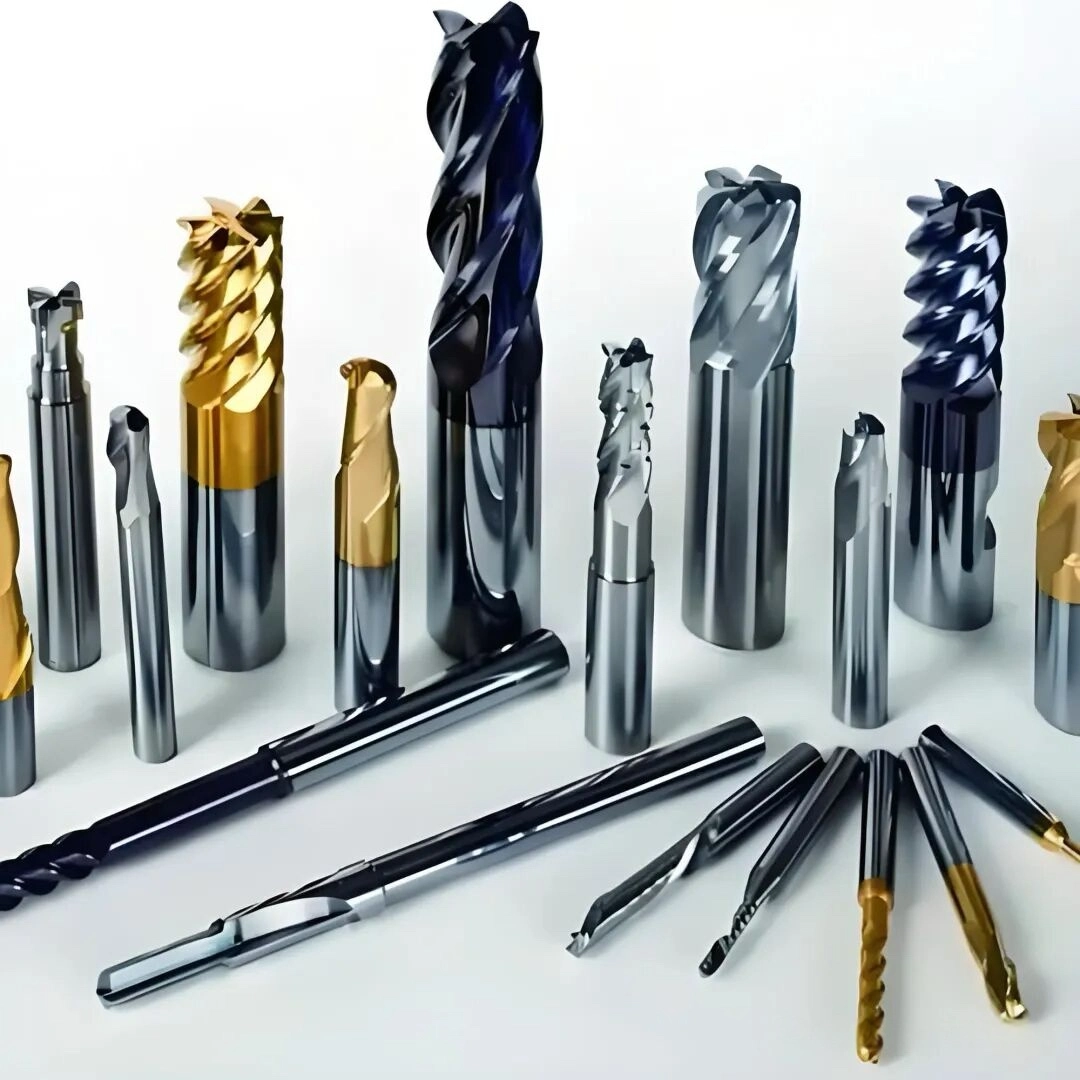
For assessing carbide cutting tools for slotting and shoulder milling, surface treatments alone are not sufficient. The core of the tool, the flute geometry as well as the shank diameter must be examined.
Key Geometric Factors in Flute Count, Helix Angle, and Shank Precision
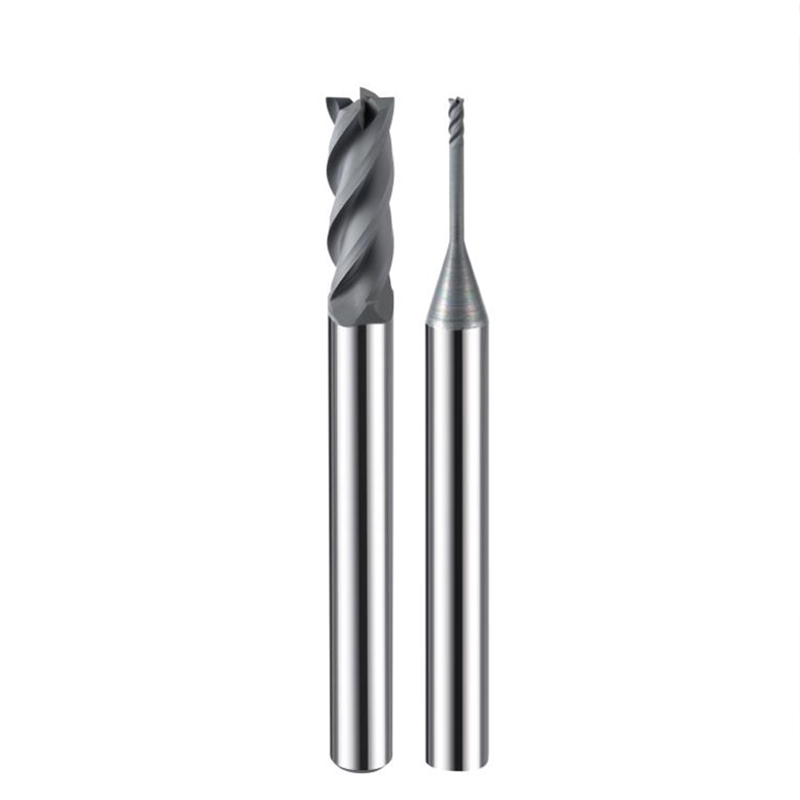
Selecting flute parameters depends directly on material chip morphology. A 30° helix angle offers a balanced equilibrium between axial lift forces and cutting edge strength. For shank execution, an h6 precision tolerance standard minimizes micro-runout when running at elevated spindle RPMs. Controlling runout prevents uneven tooth loading, which is a primary driver of sudden tooth breakage during high-feed passes with solid carbide end mills.
High-Efficiency Milling with the Diamond Coating Flat-Bottom Cylindrical End Mill
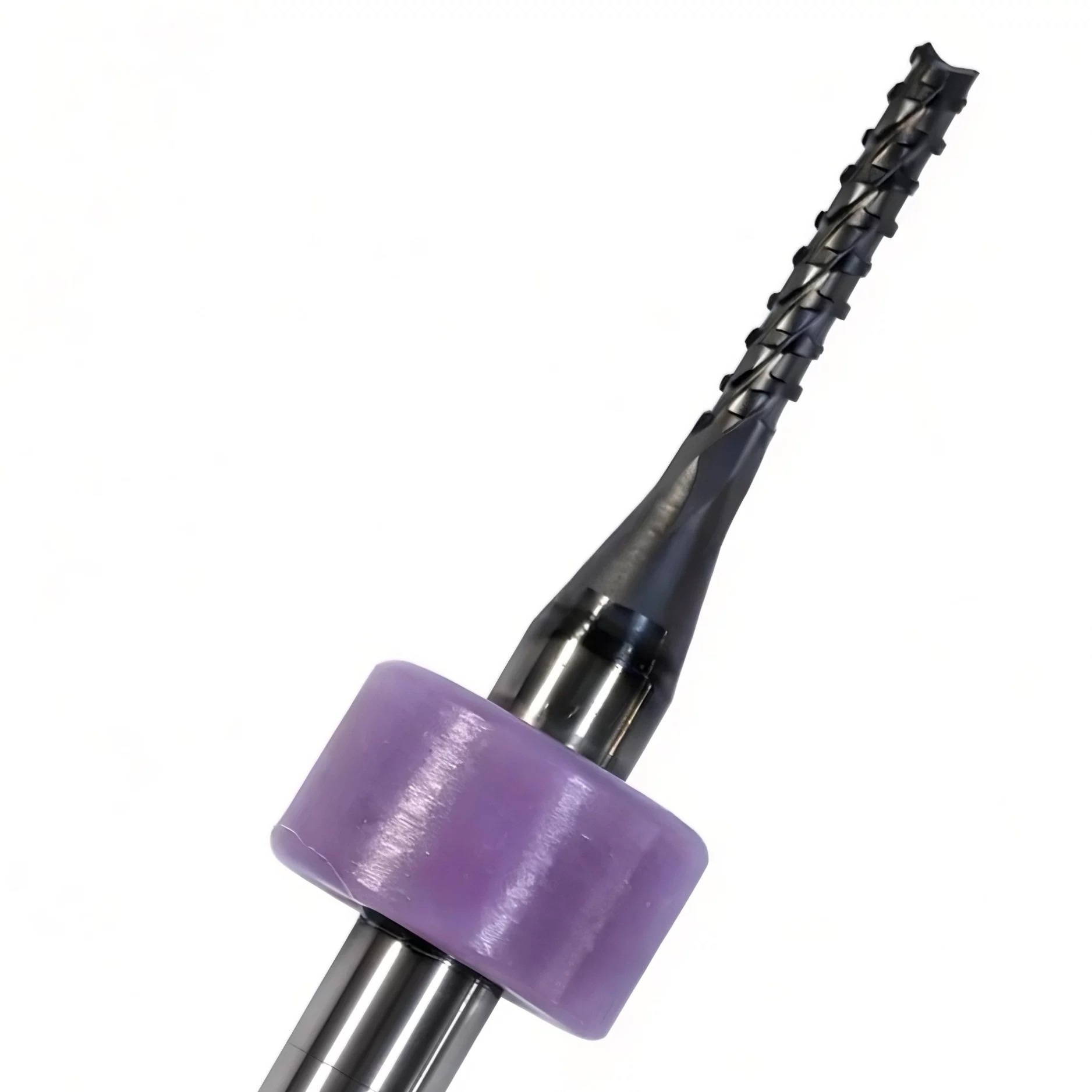
When machining graphite electrodes and castings, the problem of dust abrasion rapidly reduces the cutting diameter of tools. The Diamond Coating Flat-Bottom Cylindrical End Mill features a strong core of cylindrical shape with a continuous diamond coating. On shop-floor, this tool lasts 3 to 18 times longer than tungsten carbide tools and therefore does not require to be re-calibrated for offset values as frequently as these.
Tooling Configuration
Hardness Range (HV)
Friction Coefficient
Typical Tool Life Multiplier
Target Workpiece
Standard Uncoated Carbide
1400 – 1800
0.40 – 0.60
1.0x (Baseline)
General Steels, Cast Iron
TiAlN Coated Carbide
2800 – 3200
0.30 – 0.40
1.5x – 2.5x
Alloy Steels, Stainless
CVD Diamond Coated
8000 – 10000
0.05 – 0.10
3.0x – 18.0x
Graphite, High-Si Al, CFRP
How Can Micro-Tool Selection Eliminate Defect Risks in High-Density Circuit Boards?
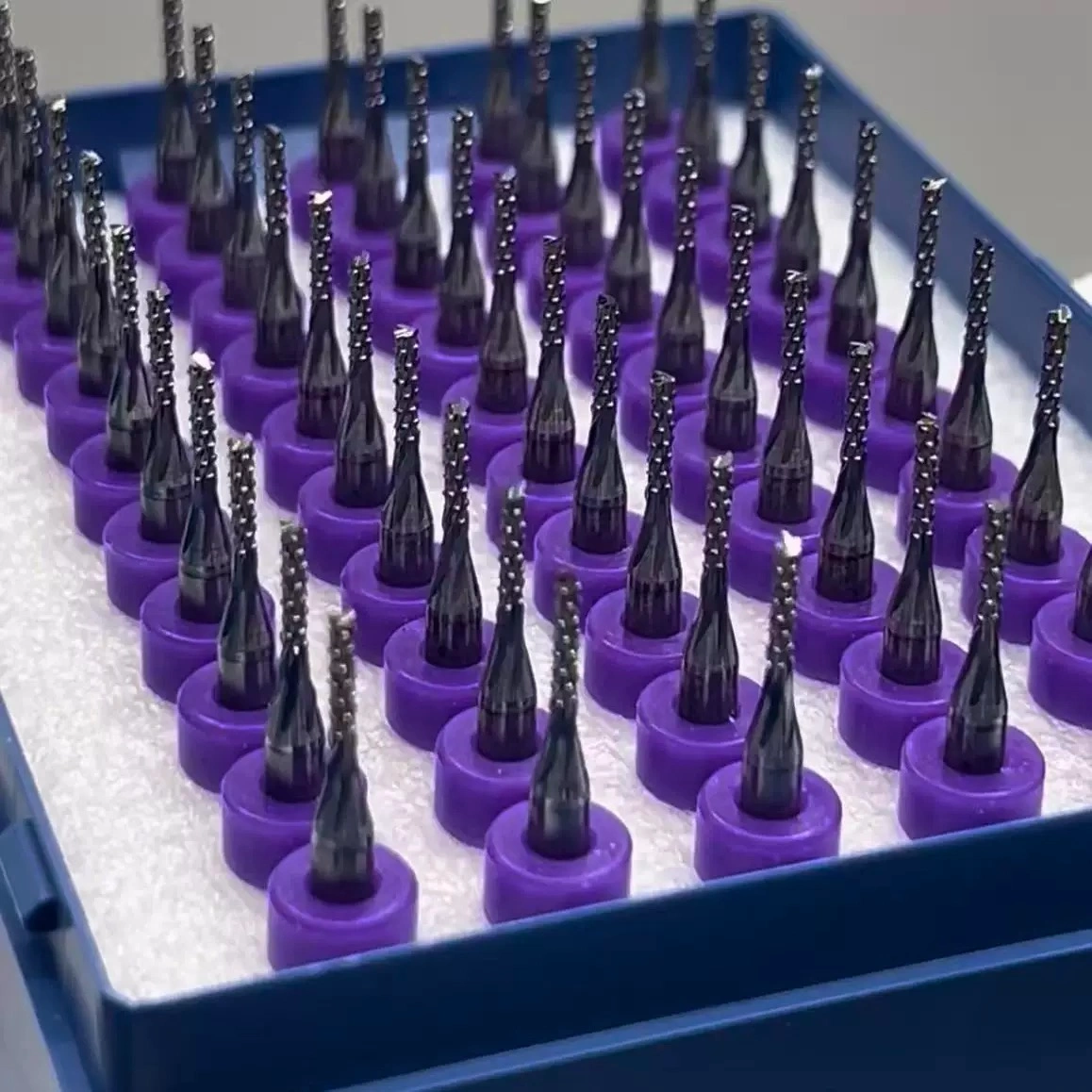
When hole sizes decrease, selecting a micro-diameter carbide cutting tool faces intense thermal friction and mechanical deflection forces within tightly confined drill flutes.
Thermal and Mechanical Stress Management in Glass-Fiber Drilling
During the PCB drilling process, glass-fiber bundles inside FR-4 and polyimide laminates act like microscopic cutting saws. High friction dulls drill margins quickly, raising internal temperatures. This thermal buildup melts resin, causing inner-layer copper tearing and “Nail Head” defects. Maintaining a Nail Head expansion below 20 µm is necessary to meet strict IPC Class 3 standards for reliable multi-layer electrical connections.
Precision High-Volume Hole Processing with the PCB Diamond Drill Bit
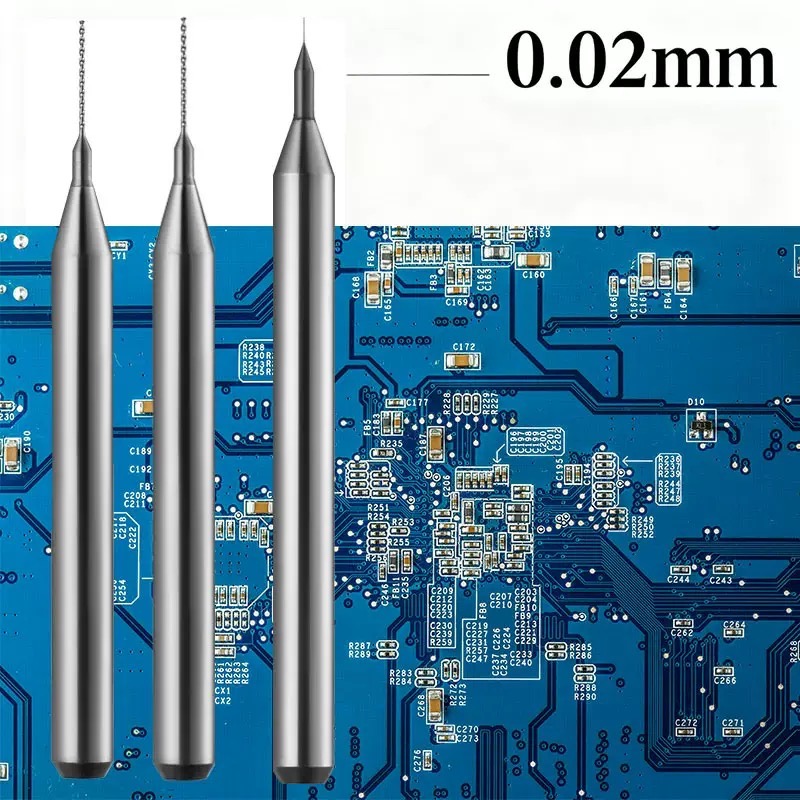
To survive high-speed drilling hits in HDI circuit board manufacturing, the PCB Diamond Drill Bit features specialized flute relief channels and smooth diamond surfaces. By mitigating abrasive friction and chip pack-up, these drills deliver an operational service life 20 to 30 times greater than standard uncoated drills, preventing burr formation across thousands of continuous hits.
Why Does Upgrading Tooling Technology Lower Overall Manufacturing Costs?
Calculating the true expense of each carbide cutting tool requires looking beyond invoice price tags to measure total shop-floor machine utilization.
Cost-Per-Part Calculation versus Initial Purchase Price
Purchasing low-cost tooling often leads to higher overall Cost-Per-Part (CPP). When a tool wears rapidly, operators spend valuable time resetting machine offsets, changing broken cutters, and inspecting scrapped parts. Switching to high-performance diamond coated cutting tools reduces total CPP by 20%–30%. By extending cutting cycles between tool changes, machine shops eliminate roughly 90% of tooling-related downtime, driving up spindle efficiency.
Cost & Operational Factor
Standard Carbide Setup
CVD Diamond Tooling Setup
Shop Impact
Tool Change Frequency
Frequent (Every few hours)
Extended (Days of continuous runtime)
Direct labor savings
Spindle Downtime
High setup overhead
Reduced by ~90%
Higher spindle availability
Dimensional Drift
High due to rapid wear
Minimal across long batches
Less scrap rate
Net Part Cost (CPP)
Higher overall baseline
20% – 30% lower total cost
Higher profitability
Tailored Non-Standard Tool Engineering for Complex Workpieces
Standard off-the-shelf tools often fail when handling unusual workpiece contours or proprietary composite stacks. To ensure strong coating adhesion, TSHZ utilizes a patented chemical pre-treatment that controls cobalt leaching to a precise depth of 3–5 µm. This controlled etching creates a mechanical interlocking network on the substrate surface, enabling the diamond film to bond chemically and mechanically without flaking off under heavy loads.
How Can You Partner with TSHZ for Technical Support and Custom Orders?
Specifying a specialized carbide cutting tool for non-standard geometry requires close collaboration between process engineers and tooling manufacturers.
Comprehensive Technical Consulting and OEM/ODM Customization Services
TSHZ offers end-to-end technical support for complex machining projects. Their engineering team reviews workpiece drawings, material specifications, and spindle parameters to recommend tailored geometries. Qualified manufacturing clients can participate in a Performance Guarantee testing program to evaluate tool life improvements on their own production lines before committing to large volume orders.
Direct Contact Channels for Engineering Drawings and Quick Delivery
To prevent production line delays, TSHZ maintains inventory for standard tool configurations while offering fast turnaround on custom engineering orders. Global shipments are handled via DHL and FedEx, delivering orders within 4–7 days to keep machine shop spindles turning worldwide.
Facing persistent tool wear in CNC milling, high scrap rates, or challenging workpiece materials? Evaluating your current tool geometry and coating specifications can unlock hidden capacity on your existing CNC machines. If you are reviewing new project blueprints or troubleshooting premature edge failure, send your drawing specifications and material details to our application team. You can contact our engineers directly to discuss customized tooling evaluations and sample testing programs, ensuring you optimize every carbide cutting tool in your shop.
FAQ
Q: How do CVD diamond-coated tools differ from standard PVD coated tools?
A: PVD coatings like TiAlN are thin ceramic layers applied at lower temperatures. CVD diamond coatings are grown as real crystalline diamond structures inside a high-temperature vacuum chamber. This yields a surface hardness of 8000–10000 HV, providing far greater resistance against abrasive materials like graphite and carbon fiber compared to PVD options.
Q: How do I know when a carbide cutting tool needs to be replaced during graphite machining?
A: In graphite processing, tool wear appears as a reduction in tool diameter rather than crater wear. If workpiece dimensions drift out of tolerance or edge burrs begin forming on electrode corners, the tool should be replaced. Using diamond-coated cutters stabilizes tool diameter over much longer production cycles.
Q: What cutting parameters should be adjusted when switching to diamond-coated tools?
A: Diamond coatings withstand high cutting speeds due to high thermal conductivity (2000 W/(m·K)). You can generally increase surface speed (Vc) while maintaining conservative feed per tooth (Fz) to avoid mechanical shock to the hard coating, ensuring smooth chip evacuation.
Learn More