
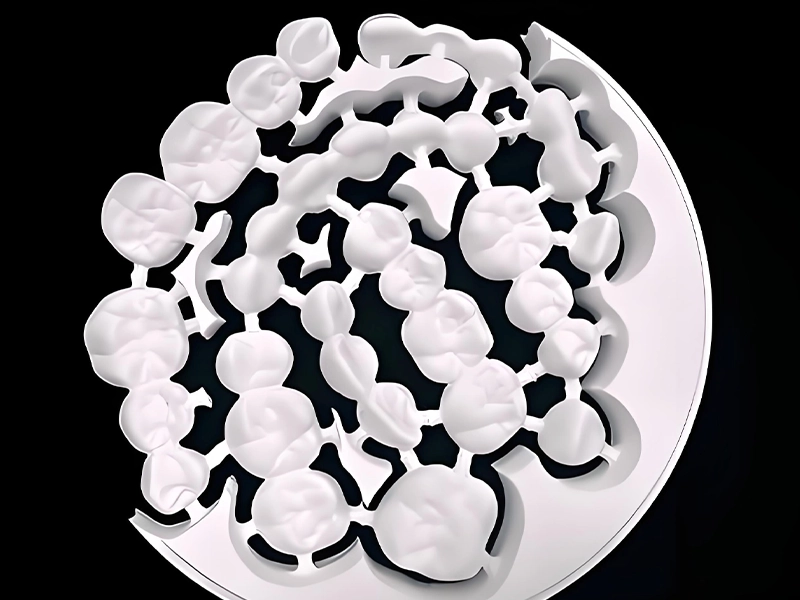
CVD Diamond Coated CAD/CAM Milling Burs for Dental Zirconia Machining
1. Severe Machining Challenges of Dental Zirconia Blocks
Dental zirconia blocks (pre-sintered & semi-translucent zirconia) are core raw materials for all-ceramic crowns, bridges, implant abutments and veneers. With hardness HV 1200–1600, high brittleness and poor thermal conductivity, uncoated carbide & DLC burs bring four major production obstacles for dental labs:
- Extremely fast tool abrasion & ultra-short service lifeDense zirconia crystals continuously abrade cutting edges. Standard carbide burs blunt after only 3–5 crowns, while micro finishing tools fail after 1–2 restorations. Frequent tool replacement raises lab consumable cost and slows down mass production workflow.
- Edge chipping & invisible micro-cracks lead to scrapped restorationsDull carbide edges squeeze brittle zirconia instead of clean cutting, creating micro-cracks on crown margins, occlusal surfaces and shoulder lines. Cracks expand after sintering, causing porcelain fracture in clinical use and high rework rate up to 10%–15%.
- Thermal-induced zirconia phase transformation damages structural strengthZirconia acts as thermal insulator. Tungsten carbide has poor heat dissipation, accumulated high temperature triggers phase shift from stable tetragonal phase to weak monoclinic phase, generating internal residual stress and reducing crown service life.
- Rough surface finish & time-consuming manual polishingConventional carbide milling leaves surface roughness Ra>2μm with uneven shoulder lines. Technicians need 10–20 extra minutes of hand polishing per piece, heavily increasing labor cost.
- Vibration & breakage of tiny long-shank micro bursUltra-small φ0.3–1.0mm burs for thin veneers deflect easily under unbalanced cutting force after edge wear. High-speed 5-axis milling often causes bur breakage and costly zirconia block waste.
2. Unique Advantages of CVD Diamond Coating for Zirconia Machining
- Extreme hardness retains sharp edges, 8–12x longer tool lifeDiamond hardness reaches HV 9000–10000, far exceeding zirconia and carbide, resisting persistent abrasive wear from zirconia grains. Each CVD diamond bur machines 30–60 zirconia restorations with stable original geometry, consistent dimensional accuracy in mass production and less downtime for tool changing.
- Superior thermal conductivity eliminates thermal phase transformationDiamond thermal conductivity is 20 times higher than tungsten carbide, instantly evacuates cutting heat at bur tips and avoids high-temperature phase shift, removing internal micro-stress and preventing post-sinter crown fracture.
- Low-friction clean cutting minimizes micro-cracks & delivers smooth shoulder finishDense nano-crystalline diamond film features ultra-low friction coefficient, removing zirconia crystals via micro-shearing rather than compressive tearing. Intact chip-free crown margins are achieved with surface roughness Ra ≤0.6μm, drastically cutting polishing labor time; some restorations skip fine polishing before sintering.
- Uniform coating on ultra-fine miniature dental bursCVD chemical vapor deposition evenly coats tiny ball nose, flat and taper burs starting from φ0.3mm, fully compatible with all 5-axis dental CAD/CAM machines. It solves the limitation of brazed PCD tools which cannot be manufactured into slender micro geometries, covering rough blanking, shoulder semi-finishing and occlusal fine finishing.
- Strong coating adhesion resists peeling under high-speed dry millingGradient stress CVD diamond deposition enhances bonding force between diamond film and carbide substrate. Stable performance under 15,000–30,000 RPM dry milling without coating flaking, smooth chip evacuation without flute clogging.
3. Professional Tool Selection by Zirconia Machining Process
- Rough blanking for bulk material removalThick micron CVD diamond 2-flute spiral burs with large chip pockets, high stock removal efficiency for thick multi-unit bridges and full crown roughing.
- Semi-finishing for crown contour & shoulder formingMedium grain diamond taper burs with reinforced cutting edges to produce continuous smooth crown shoulders and reduce post-processing polishing workload.
- Ultra-fine finishing for anterior thin veneers & occlusal textureNano-crystal ultra-small ball nose burs (φ0.3–1.0mm) with razor-thin sharp edges, zero edge chipping for ultra-thin zirconia veneers and delicate occlusal anatomy.
- Extended long-flute burs for complex implant abutmentsGradient stress long reach diamond burs eliminate vibration during deep internal contour milling of implant abutments without coating delamination.
4. Standard Machining Parameters for Pre-Sintered Zirconia
Spindle speed: 15,000–25,000 RPMFeed rate: 100–300 mm/minDepth of cut per pass: 0.1–0.5 mm (shallow layered cutting to reduce chipping risk)Processing mode: Full dry milling with cold air dust extractionMilling strategy: Climb milling to lower compressive stress and micro-crack generation
5. Main Application Fields
Single-unit all-zirconia crowns, multi-unit zirconia bridges, anterior zirconia veneers, zirconia implant abutments, full-arch zirconia frameworks, mass digital milling in dental labs, chairside CAD/CAM machining in dental clinics.
6. Operation Notes & Restrictions
- Hard irritant zirconia dust is generated during processing; dust extraction equipment and protective masks are mandatory for operators.
- Never machine ferrous metal, titanium or cobalt-chromium alloy with diamond coated burs. High cutting temperature triggers chemical reaction between metal and carbon, leading to diamond film peeling.
- Only suitable for pre-sintered / semi-sintered soft zirconia blanks. Fully dense sintered hard zirconia restorations require brazed PCD tools instead of thin CVD diamond coating.
- Spindle collet runout must be controlled below 10μm; excessive runout accelerates coating wear and edge chipping.
- Avoid extremely low feed rate slow grinding; continuous friction heat causes zirconia phase transformation and premature coating aging.